Showing posts with label Record Keeping. Show all posts

Wednesday, April 24, 2013

Arbor Day - The Last Friday Before May!

Annual  -- To do something EVERY year.  Rigging Inspections should come to mind, and although 'Arbor Day' is intended to be the day we all plant a tree, or three, it should also be a reminder that the counterweight carriages (aka: 'Arbors') in our stage rigging need love, too.

We want to look over your equipment and make sure that everything is in proper order.
  • Nuts are tight.  The top and bottom rod nuts should both be checked to ensure that they are properly clamping the top and bottom arbor frames.
  • The rods and back-bone are straight.
  • Each cable and rope is properly secured.
  • The guide shoes are clean and properly fitted to the guide rails.
  • Spreader plates are spaced-along the length of the weight stack and not buried at the bottom.
  • Weight locks are present, and have screws in them to allow them to be tightened-down so they can hold the counterweights from jumping out of the arbor frame in the event of a run-away and crash.
  • Take the time to enumerate the arbors so they are easily identifiable regardless of what level they are positioned.
  • Check to see if anyone has maybe added extraneous weights to the system . . .
  • There are many more things to check as a part of the rigging system, so this wasn't a complete list.

    Remember: People are the most dangerous things in the theatre, so make sure that each person using the rigging system understands how to handle the weights, are secure so they can't fall over the weight loading railing, and they fully understand about using spreader plates, rope locks, and weight locking collars.  Using the tools you have properly can save lives!

    KEEP THOSE ARBORS BALANCED (also referred to as: "In weight").  Train your crews to pace their work so that the fly crew (loading bridge crew) can keep-up with the ground crew that may be loading or striping a batten.  Out of balance systems can lead to run-aways, and that can really rack-up a system:

    Friday, July 13, 2012

    Keeping it all together

    GRC (Not the Nutrition Guys) is a term commonly used to abbreviate Governance, Risk Management, and Compliance in the safety industry.  It is supposed to be an organizational cohesion that coordinates the efforts of everyone in a business so that guidance (Governance) is uniformly applied to all the sub-groups, and the subgroups share information and resources openly.

    School Districts and Universities typically show significant separations between Risk Management (aka insurance claims management), Facility Safety (building and equipment maintenance), Public Safety (security), and personnel safety (actually training staff and students).

    Interdepartmental separations occur, too.  Why is it the automotive shop student is given protective eye wear, while the theatre shop student has to provide his own?  The disparities are numerous and sometimes frustrating.  It affects the supply of safety information, safety goods, safety training, and maintenance.  When properly implemented, it answers the question of "Who's going to pay for this?"

    For the governing administrators to do their jobs effectively, it is critical that they understand the wide variety of environments under their care.  In the theatre, this means that we have to pull-back the curtain and expose ourselves to the scrutiny of other non-theatre people.  This is hard.  We spend our entire careers trying to create magic and not let anyone outside of the theatre process know how it really works.  This is the exception.  When it comes to safety - everyone has to know and understand.

    Don't stand there and tell everybody that your theatre is safe.  It's not.  This blogger sees brand new theatres that are constructed unsafely all of the time, and few new facilities come with any significant amount of operational safety training - everybody just brings their old bad habits with them and go on with little or no thought as to how they might make cultural changes to their work process.

    In the 70's, the phone company ran a series of advertisements that said: "To communicate is the beginning of understanding."  The theatre plant is a perfect example of how important this is.  Maintenance workers need to access equipment and understand what is 'special' theatre equipment and know when they can work on it, and what is 'off limits' so that only specially qualified personnel are brought in to service it.  Good examples might be:
    • Dimmer Racks:  The air filters need to be cleaned regularly.  This may require that the power to the dimmer rack be disconnected because there may be live electrical parts within.  Chasing-off the cleaning crew and then not having the filters serviced may cause the dimmers to overheat and malfunction, or even catch fire.  At a minimum, it will shorten the life of the equipment.  This applies to the air filters for the workspaces around the theatre, too.  I've seen clogged air filters and air grilles in follow spotlight rooms, on stages, in dimmer rooms, and on dimmer racks - all preventable if the theatre staff would engage with the maintenance staff.
    • Stage Rigging:  Equipment must be inspected regularly by qualified personnel.  Most janitors and building maintenance crews are NOT trained or experienced enough to perform this task.  The maintenance of the stage rigging falls into this category.  The oil field rigging, construction rigging, or ship rigging backgrounds that some maintenance workers might have may be of some use, but without a knowledge of theatrical systems and how they are used, the resulting 'fixes' may be dangerous, incompatible with the theatrical operational needs, or aesthetically undesirable.
    • Fire Curtain, Smoke Vent, and Fire Doors:  Inspections and maintenance present challenges similar to the Stage Rigging.  Corrections that are not compatible with Fire Codes, Theatre Operations, and the Audience's enjoyment of the presentations must be prevented through the use of knowledgeable people.  Hire a consultant of you need one - this is where your Risk Management Department and or your Safety Office may be able to assist in securing the necessary funding.
    Finding a balance with safety equipment provision policies, cost deferrals, and training budgets can only be achieved if the various participants can speak openly about the needs of their buildings and operations.  It also requires that the administrators truly understand and acknowledge just how dangerous a theatre plant is.  They care about bad brakes on buses, broken playground equipment, football helmets, and toxic fumes in the chemistry lab - why should your performing arts venue be any different?

    Blogger Norman Marks on the Sustainable Business Forum site has a series of articles that help to explain GRC:  http://sustainablebusinessforum.com/node/59561

    Tuesday, February 21, 2012

    Yeah, they have an app for that, too.

    The iAuditor application for the iPad provides a convenient way to deploy checklists to all of your department heads and workers.  This customizable tool allows you to set-up check-lists, take photos, sign the document, and e-mail it so you have a clear record of inspections.

    This app replaces paper-based reporting and allows the user to enhance reports with photographs showing compliance issues.  It also greatly reduces the likelihood of late submissions and falsified time-stamping.

    With a smart interface to build forms, iAuditor allows for forms to be created on-the-fly from within the app, a form can be created and modified to suit departmental needs throughout the theatre plant.  By giving users the power to create their own audits, iAuditor can be applied to thousands of situations. This level of customization in auditing has never been seen before in the safety industry.


    The iAuditor app has full GPS integration, too, so it can identify reports applicable to specific venues for large areas like theme parks, or be used on tour venue-to-venue.


    An unlimited number of forms and checklists can be created using the form building screen, and templates can be shared between users. Ready-to-use audit forms are also available for free download from the SafetyCulture Secure Online Cloud.

    Upon completion of an audit or checklist, the form can be quickly e-mailed as a PDF, which is compatible with almost any computer, smartphone, or tablet with a PDF reader application.

    An audit checklist can be used by workers to ensure they are meeting their reporting and record-keeping requirements. Uses include:
    • Life Safety Code Inspections
    • Occupational Heath and Safety Codes
    • Governmental Reporting Requirements
    • Fire Prevention Checklists
    • Building Safety Checklists
    • Electrical Safety Checklists
    • Ladder Safety Checklists
    • Pre-Show, Intermission, and Post-Show Checklists for both FOH and Backstage
    • Shop, Storage, and Loading Dock Safety Audits
    • Vehicle Inspections
    • Emergency Lighting & Exit Sign Inspections
    • Fire Extinguisher Inspections
    • Fire Door Inspections
    “Businesses all over the world are using technology to work smarter, not harder. We’ve listened to the people who are out in the field every day, and we’re committed to helping them work safer by using technology. With iAuditor, we’ve shown another example of this commitment; an incredibly versatile auditing and checklist app that is free to use and free to download.” Said Luke Anear, Managing Director of SafetyCulture Australia (www.safetyculture.com.au).

    More information about the iAuditor app can be found at: www.safetyculture.com.au/iauditor/

    Friday, August 19, 2011

    NFPA Announces New Editions of Codes and Standards

    Theatres are complex buildings, and they don't usually don't come with an Instruction Manual. You need to know what you can do, and what you can't do. And it usually helps if you can quote the authorities 'Chapter and Verse'.  This way people understand that it's not you that's being a pain in the butt, but that there really is a law, rule, or standard that defines the proper way to handle situations around the venue.

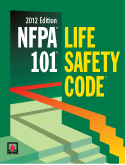
    The 2012 NFPA 101 Life Safety Code has been made available for purchase on the NFPA web site:
    http://www.nfpa.org/catalog/product.asp?pid=10112&title=2012-NFPA-101-Life-Safety-Code&category_name=&target_pid=10112&source_pid=10109&link_type=edition_change

    This edition has changes that relate to egress paths, so they have used that theme on the cover design.


    The 2012 NFPA 204 Standard for Smoke an Heat Venting (that smoke hatches / vents over the stage for the theatre folks) has also been updated and information can be found here:
    http://www.nfpa.org/catalog/product.asp?pid=20412&title=2012-NFPA-204-Smoke-and-Heat-Venting&category_name=&target_pid=20412&source_pid=20412&link_type=edition_change

    This describes the means of operations, quantity required, and recommended inspection procedures and scheduling.

    If you have a Fire Curtain (many theatres) or Fire Doors (almost all buildings), then you need to fully understand the requirements for inspecting and testing these critical devices.  The 2010 NFPA 80 Standard for Fire Doors and Other Opening Protectives is the key to this part of your facility management.

    This talks about door props, latches, crash bars, automatic closers, painting doors, and identifying Fire Doors.

    Also of interest to many is the 2011 NFPA 70 National Electric Code which is everything you need to know, and them some, about electrical issues.  There are sections about the wire and cable we are permitted to use in the theatre environment, special requirements for dressing room lights and power receptacles, and many important items.  Product information can be found here:
    http://www.nfpa.org/catalog/product.asp?pid=7011SB&title=Code-70-2011-National-Electrical-Code-NEC-Softbound&category_name=&target_pid=7011SB&source_pid=7008SB&link_type=edition_change

    The companion book for those working on electrical equipment (almost all of us, whether we should or not) is the 2012 NFPA 70E Standard for Electrical Safety in the Workplace.  This addresses Lock-Out-Tag-Out (LOTO) procedures, ArcFlash, working 'HOT', and many other life-threatening activities when working with electricity.
    http://www.nfpa.org/catalog/product.asp?pid=70E12&title=2012-NFPA-70E-Standard-for-Electrical-Safety-in-the-Workplace&category_name=&target_pid=70E12&source_pid=70E09&link_type=edition_change

    Many of the NFPA publications have companion Handbooks that are available that break-down the codes and standards into manageable concepts with great graphics and explanations describing both proper and improper conditions.

    Put these books in your budget.  Each one usually has a 3 to 5 year update cycle, so setting aside the funding for each of these should be a simple task.  If you need justification for the expenditures, then ask the powers that be how you are supposed to do your job without the actual books that define the Laws you must obey and the Standards to which you should adhere.

    Warning:  Reading these books may induce drowsiness. Do not drive or operate heavy machinery while reading them.

    Wednesday, December 22, 2010

    Hemp House Rigging - The 'old fashioned way'

    Dawn Wilfong, 24, works the fly rail and hauls a piece of coiled rope during a performance of “A Christmas Carol.”  (c) 2010 Photo by Thomas Slusser (For The Virginian-Pilot)

    Check out this great story about one of the few remaining active rope rigging houses.  http://hamptonroads.com/2010/12/behind-scenes-wells-theatre-rare-find

    This wooden pin-rail is in a theatre built in Texas in the 1920's.

    One of the most common scenarios this blogger sees is equipment like this that has never been serviced in 50-70+ years.  The Loft Blocks are sometimes made of dry-rotted wood or sand-cast pigiron, either of which could fail under load without notice.  The ropes need constant review and regular replacement, too, as they weaken with age and abrasion.  As you can see in the second picture, the facility operators in this building don't understand the concept of counterweighting the batten loads, so everything is stage-heavy.  The battens are dead-hauled (bull-dogged) up, and if the tie-off fails or the fly crew looses their grip, then the batten and load will will come crashing to the stage.

    Other potential problems are retro-fitted belaying pins:   I've found rebar, conduit, gas pipe, broom handles, steel spikes, and other odd items used in place of the correct items.  Some hemp-house facilities are 'hand-me-down' theatres that started-out as the High School Auditorium, then was the Middle School, and is now part of the Elementary School facility.  Not only is the equipment MORE DANGEROUS, but it is located where young children not familiar with the hazard potential can pull-out the belaying pins and/or untie the rope lines.

    It is extremely important that the operators and staff fully understand how the fly system works and what safety precautions must be taken when loading and operating the system.

    Thursday, November 19, 2009

    Auditorium Safety Webinar Now Available at SchoolDude


    These folks have graciously invited me to co-present a webinar about auditorium safety management. The event was live on Nov 18, 2009 and titled "Facility Masters Webinar Series: Auditorium and Theatre Safety".  It has been archived and can be viewed at http://discover.schooldude.com/forms/2009-11-RY-FM-MD-AuditoriumSafety.

    At the SchoolDude web site you can watch and listen to the presentation by Host Roger Young, New Mexico Deputy Fire Marshal Ray Wolf, myself, and SchoolDude Mayor David Kornegay.  There are also many document and presentation downloads available.

    Depending upon your area of theatre involvement, some aspects of this webinar may not seem interesting, however, please be patient and take the time to watch and listen all the way through it. There are points of information throughout it that relate directly to the theatre safety issues.  Please pass this link on to your school maintenance and management officials, too, so that they can see how facility management relates to theatre safety.

    Thursday, September 24, 2009

    It's 10:00 - Do you know where your Fire Extinguishers are?


    When you have fire extinguishers in your facility it is very important that you and your staff:
    • Know where they are
    • Know when they were last inspected
    • Know how to use them

    Knowing where they are is important not just for you and your staff, but for the person that has to check them as well. I frequently find units in the same building that have five or six different inspections YEARS. It is obvious that each successive inspector did not know where all of the fire extinguishers were located. Suggestion: Draw a building floor plan and annotate the location of all of the fire protection devices:

    • Fire Extinguishers
    • Fire Alarm Pull Stations, Smoke Detectors, Rate-of-Rise Heat Detectors
    • Special Devices (Fire Door releases, Fire Curtain(s), Smoke Vent(s), Elevator Lobbies)
    • Fire Alarm Control Panel (FACP)
    • Alarm Strobes, Horns, Bells
    • Emergency Lights
    • Fire Sprinkler Heads
    • Fire Hose Cabinets

    Keep it filed with your inspection records, and post copies for your staff. Other good information to keep with this would include contacts:

    • Fire Marshal
    • Fire Alarm Company
    • Fire Sprinkler Company
    • Fire Extinguisher Service Company
    • Rigging System Service Company
    • Smoke Vent System Service Company

    Note the dates on the inspection tag in the picture above -- they are ambiguous (no year), and difficult to read. To help identify yearly inspections are being done on all equipment, use a different color of tag each year (red, yellow, blue, green, white, etc.) so that non-conforming tags stand-out more noticeably.

    Know when and how to use a fire supression device. Get training for your staff and students. If you can't actually put-out a real fire, then do the next best thing and use a fire extinguisher training device like the BullsEye or I.T.S. Extreme from BullEx Safety (http://www.bullexsafety.com/).

    Tuesday, April 28, 2009

    "Allright Bugsy, it's curtains for you."

    Drapes and other soft goods used on the stage must be treated with a chemical fire retardant or be fabricated from an inherently flame proof material. When the manufacturer creates the product they should tag it so that there is a record of the date of manufacture / treatment, and retreatment, if any. The label shown above is a good example of that type of marking.

    So, what's wrong with this picture? The date of manufacture is 9-15-76. This picture was taken in March of 2009, and the curtain was still in use! 33 years later!

    The chemical fire retardant treatment applied to theatrical fabrics is typically only good for 2-5 years, depending upon the heat and humidity that the fabrics have endured over their service life. Soooo, this curtain was, shall we say, waaay past it's useful working life.

    Check your curtains, see that each one has a serial number or unique ID marker, has a tag showing date of manufacture (not date of installation or first use), and lists the name of the chemical treatment that was applied.

    Keep separate records that corrispond to each soft good so that you can schedule and budget for periodic cleaning and service. This is a great use for any computer based appointment or calander system (like MS Outlook). Enter the date of manufacture as an 'appointment', and then set the recurrance for every "X" years (as recommended by the manufacturer). The computer will remind you of your appointment when it rolls around, just like a birthday or a dentist appointment.