Showing posts with label NFPA. Show all posts

Friday, December 11, 2015

Burn Survivor from The Station Nightclub fire speaks-out for the NFPA

On February 20th, 2003, a fire broke out in a nightclub that killed 100 people in just minutes.  Rob Feeney was there, and was one of the lucky ones that got out before the fire and smoke became to intense to survive.  Join Rob to read more about his experience at the NFPA's Fire Sprinkler Initiative blog.

http://sprinkler.blog.nfpa.org/2015/12/burn-survivor-from-the-station-nightclub-fire-now-nfpas-newest-blogger-and-fire-sprinkler-champion.html

For other posts about nightclub fires use the Theatre Safety Blog's search for keyword 'Station Nightclub'.


Tuesday, September 15, 2015

Fire Door Safety Week - Jim Morrison would be proud

Lori Greene, blogger at IDigHardware! is a great resource for all things relating to fire doors, and her most recent post at LinkedIn is no exception.  Check it out: https://www.linkedin.com/pulse/fire-door-safety-week-lori-greene-ahc-cdc-ccpr-fdai (or if you are not a LinkedIn member, go to: http://idighardware.com/2015/09/fire-door-safety-week/).  Some of Lorrie's past posts can also be found at The Building Code Forum http://www.thebuildingcodeforum.com/forum/blogs/u74/
 Get them Inspected, Detected, and if necessary, Rejected

Friday, May 3, 2013

LOTO also means - Test Before You Touch

As a part of Electrical Safety Month, the Electrical Safety Foundation International (ESFi) has published a safety flyer addressing the need to test an electrical device BEFORE you stick your fingers or tools in to work on it.  Just because you THINK it's OFF, doesn't necessarily MEAN it's OFF.  To mix a metaphor and paraphrase our favorite Star Trek character:
      Measure Twice - Live Long and Prosper!


Get the Test Before You Touch safety flyer here for reprinting and distribution to your crew:  http://esfi.org/index.cfm/pk/download/id/10818/pid/10272

Or you can order the pamphlets for a nominal charge at:  http://esfi.org/index.cfm/pid/10693

There is a free Test Before You Touch safety video that can be watched online or downloaded at:
http://esfi.org/index.cfm/pid/10847 and scroll down to: ESFI "Never Assume" Safety Series

Or you can purchase the "Never Assume" DVD here:  http://esfi.org/index.cfm/pid/10683


Thursday, May 2, 2013

2014 NFPA 70 - NEC is now available for Pre-Order

The NFPA announced that the 2014 NFPA 70 - National Electric Code can be pre-ordered with a 25% discount if the order is placed before July 10, 2013.  The code book won't ship until later in the year, and you won't be billed until it ships.
For more info, visit: www.nfpa.org/catalog/product.asp?pid=PRE70&order_src=D299

Saturday, April 6, 2013

Fire and Audience Safety in Nightclubs

I went to a nightclub / restaurant tonight to get a bite to eat, and they had me seated upstairs in a balcony area that overlooked the main level of the nightclub.  Just as I was getting ready to leave, I went to go down the staircase that I had originally come-up, only to find that it was blocked with a portable sign that read:  "Stairs Closed" hand-scrawled in chalk.

There were no other instructions, signs, arrows . . . nuttin!  And the  EXIT  sign above the 'closed' stairs was still illuminated, beckoning all to "come-hither".

I look over the railing back towards the bottom of the staircase, and I see that the club has cordoned-off what was the main entrance to the club, and a band is loading-in their stuff.  The usual junk is piled every which-way: drums, speakers, guitars, mic stands, road cases . . .

Huh?  I look again, a sure enough, my eyes are not fooling me, they have removed the host stand and they are using the main entrance to the club as the stageI can see the glowing red  EXIT  signs over the doors.  I look around upstairs and I do find another exit, although it's not well-marked. So this means that 1/2 the upper balcony audience may have to go down the other stairs, and 1/2 may have to find their way out through the adjacent bar area (again - the  EXIT  sign in the adjacent bar area is NOT visible from the show room balcony seating area).
Band Set-up in front of EXITs

Next, I go downstairs to get a better look.  Once there, I see that at the bottom of the 'closed' staircase (which ended right at one of the two front doors), they had amplifiers and junk stacked in the travel path.  So I look around some more.  To the other side of the other main entrance / exit door there was a doorway that went into a souvenir shop at the time I came in to dine.  The souvenir shop had another exit door to the street, but now it was closed-off and inaccessible.  I moved away from the band's makeshift performance area and I found a passage out to anther adjacent part of the bar, it has an  EXIT  sign, but the lamps are burned-out, and the passage is circuitous and poorly illuminated.

I follow that passage into the adjacent bar chamber, and I can see two possible egress routes.  One has a vestibule with another door leading to the outside, but the  EXIT  sign for this door is only visible to about 1/2 of the room, or less.  I walk closer to this exit door and gradually the overhanging soffit that forms the vestibule area around the door reveals that there is an  EXIT  sign above the door.  Mystery solved!

Final count:  One functional exterior EXIT from upstairs (sign not visible from the balcony audience area), Two functional exterior EXITS from downstairs (one of which the sign is mostly obscured, neither of which are visible from the central audience area for the make-shift stage).

This means that a space that had SIX exits during the day (a light density crowd, mostly people dining) when the Fire Marshal visited and there was a lot of outside light filling the space through the windows; and only had THREE working exits at  night  when the patrons are highly inebriated and more densely packed.   All this on a Friday night in a college town . . .

Wednesday, March 13, 2013

"Oh, that couldn't possibly happen here . . ."

Famous last words.  Not words to live by, either.  The bloggers at Cue To Cue on the BackstageJobs web site have posted a great summary about many of the Theatre and Assembly Space Fires that scorched millions of dollars worth of facilities last year.  Go here to read about them:

Theatre fires are not “something that used to happen.” There were at least 14 just this year.

Of particular interest are the video clips of the scenery and drapery fires that occurs on-stage during a performance.  Luckily, they didn't result in the 600+ deaths that the Iroquois Theatre fire caused, but the circumstances were largely the same - and this blogger sees the set-up for this type of fire ALL THE TIME!  Fireproof your sets - its not just a good idea - its the law! Ref:  NFPA 101 Life Safety Code - Chapter 13, Section 13.4.5.11

For schools and other theatre owners that don't have, or are planning to omit fire curtains from your venue, take a serious look at your fire prevention and control planning - because this could happen in your building, too!

Thursday, February 14, 2013

Quoting them chapter and verse . . . the NFPA moves into the 21st century

Tact, it is said, is the ability to make a point, without making an enemy.  Sometimes you need to show someone that it's not you, personally, that has an opinion about a safety issue - it's the NFPA.  Just like Sgt. Joe Friday on Dragnet, you can show 'em "Just the facts, ma'am".  Carrying around a set of code books isn't that easy, it's like a set of encyclopedias (only much more boring).

Well, our friends at the NFPA have just made that a lot easier, and probably saved you some chiropractic bills in the process.  You can now get access to the NFPA code books in PDF format and browse the codes on your iThing-a-ma-bob (https://itunes.apple.com/us/genre/ios-reference/id6006?mt=8&letter=N&page=4#page, then scroll to NFPA . . .).

NFPA Mobile

And to top that off, the NFPA has Podcasts about numerous Fire Safety subjects.


Wednesday, November 28, 2012

Killer Show - Not your normal night out.

Author and Lawyer John Barylic has summarized the events that led up-to and resulted in the 2003 fire that killed 100 people at The Station Nightclub in East Warwick, Rhode Island.  His book summarizes the mounds of documents researched on behalf of the families of those injured and killed that fateful night.

The story of the fire, its causes, and its legal and human-tragedy aftermath, is one of human lives put at risk by petty economic decisions – by a band, club owners, promoters, building inspectors and product manufacturers. Any one of those decisions could have potentially avoided the tragedy. Together, however, they formed a fatal critical mass.

Information about his book can be found at www.killershowbook.com


The site include reviews of the book, photos from the event, and links to interviews.
Photo Credit:  Daniel Davidson (Copyright holder)
Other interesting links about this event:

NIST Disaster and Failure Studies:
www.nist.gov/el/disasterstudies/fire/station_nightclub_fire_2003.cfm

NFPA Case Study: Nightclub Fires:
www.nfpa.org/assets/files/pdf/research/case_study_nightclub_fires.pdf

Fire Engineering Magazine:
www.fireengineering.com/articles/print/volume-165/issue-1/features/station-nightclub-fire-revisiting-lessons-p1.html

Friday, November 23, 2012

70th Anniversary of Cocoanut Grove Nightclub Fire

QUINCY, MA -- The National Fire Protection Association (NFPA) has teamed up with a number of public and private organizations to form The Cocoanut Grove Coalition to preserve the history of the monumental nightclub fire that took the lives of 492 people 70 years ago.

The deadliest nightclub fire in U.S. history occurred in Boston on November 28, 1942. The coalition includes the Boston Fire Department, the Boston Fire Historical Society, Boston Fire Museum, City of Boston Archives, Boston Public Library, and Massachusetts General Hospital.

According to Sue Marsh, the NFPA’s librarian, time was of the essence as all agreed that it was vital not to let more time pass before gathering additional resources, especially personal accounts from those impacted by the fire, “knowing that if we didn’t, things would be lost.”

Three videos in which Cocoanut Grove fire victims tell their stories exemplify the rich content that has come from these collections and this project.

All of the organizations represented in the coalition have material related to the fire. The intent of the project, according to Marsh, is to provide a single way to access all of the information as well as attract additional information that is out there but has not surfaced.

The NFPA library receives more requests related to Cocoanut Grove than any other incident.

“Unlike some earlier landmark fires, like the Triangle Shirtwaist Co. fire in New York in 1911, the Cocoanut Grove fire did not result in significant changes to NFPA codes,” writes Fred Durso, Jr. in the November / December 2012 issue of the NFPA Journal.

However, Boston and municipalities throughout the country underwent sweeping changes, including the reclassification of nightclubs and restaurants as places of public assembly, which is how they were already regarded in the Building Exits Code. The change introduced more stringent requirements for exits, emergency lighting, occupancy capacities, and other safety features.”
For more information, visit The Cocoanut Grove Fire website, www.cocoanutgrovefire.org.

Friday, July 27, 2012

ZZzzzaaap! Whose Fault is that?

The 2011 NFPA 70 (aka The National Electric Code) introduced new requirements for many items. Among the new items is the clear and concise labeling of electrical panels, meter housings, and disconnects to show the available fault-current.  See NEC Article 110.24 for more information (www.nfpa.org/catalog/product.asp?pid=7011SB).  These requirements are in addition to the Arc-Flash labeling requirements in 2012 NFPA 70E - Electrical Safety in the Workplace.


To achieve proper labeling, DuraLabel has developed an ANSI Z535 compliant product group that addresses this requirement, and they have guide books to educate you further about it, too.
Go to: www.duralabel.com/free-gifts/free-fault-current-labeling-guide.php to get your free Available Fault-Current Labeling Guide.

Monday, May 14, 2012

Grounding Versus Bonding - Free Webinar

Grounding Versus Bonding of electrical systems, sensitive electronic, and communications equipment is the most important and least understood activity in the electrical, data process, and communications industry.


Webinar is at: Thursday, May 24, 2012 at 2:30PM US Eastern Time (UCT -5 hours)

In this 60-minute FREE webinar, Mike Holt of Mike Holt Enterprises, Inc. will explain the purpose of grounding and bonding as related to the most current requirements set forth in the 2011 NEC (NFPA 70). Full color graphics and practical examples of typical electrical installations will help attendees learn the concepts necessary to safely design, install, and inspect electrical systems rated 600V or less.

This workshop is brought to you by EC&M magazine (http://ecmweb.com) and Fluke test equipment (www.fluke.com).

Registration for this event is at:
https://event.on24.com/eventRegistration/EventLobbyServlet?target=registration.jsp&eventid=458297

Thursday, March 29, 2012

Ring-toss in the dark anyone?

Ever try to find a door knob in  total darknes?   It's not so easy.


This product is designed to fit around most standard door operators and provide a clue as to where the exit is located.  Great for storage rooms, restrooms, and anyplace that there may not be emergency lighting installed.

Product resources:
GBC Safety Glow (www.gbcsafetyglow.com)
SafeGlow (www.safeglow.com)

Tuesday, February 21, 2012

Yeah, they have an app for that, too.

The iAuditor application for the iPad provides a convenient way to deploy checklists to all of your department heads and workers.  This customizable tool allows you to set-up check-lists, take photos, sign the document, and e-mail it so you have a clear record of inspections.

This app replaces paper-based reporting and allows the user to enhance reports with photographs showing compliance issues.  It also greatly reduces the likelihood of late submissions and falsified time-stamping.

With a smart interface to build forms, iAuditor allows for forms to be created on-the-fly from within the app, a form can be created and modified to suit departmental needs throughout the theatre plant.  By giving users the power to create their own audits, iAuditor can be applied to thousands of situations. This level of customization in auditing has never been seen before in the safety industry.


The iAuditor app has full GPS integration, too, so it can identify reports applicable to specific venues for large areas like theme parks, or be used on tour venue-to-venue.


An unlimited number of forms and checklists can be created using the form building screen, and templates can be shared between users. Ready-to-use audit forms are also available for free download from the SafetyCulture Secure Online Cloud.

Upon completion of an audit or checklist, the form can be quickly e-mailed as a PDF, which is compatible with almost any computer, smartphone, or tablet with a PDF reader application.

An audit checklist can be used by workers to ensure they are meeting their reporting and record-keeping requirements. Uses include:
  • Life Safety Code Inspections
  • Occupational Heath and Safety Codes
  • Governmental Reporting Requirements
  • Fire Prevention Checklists
  • Building Safety Checklists
  • Electrical Safety Checklists
  • Ladder Safety Checklists
  • Pre-Show, Intermission, and Post-Show Checklists for both FOH and Backstage
  • Shop, Storage, and Loading Dock Safety Audits
  • Vehicle Inspections
  • Emergency Lighting & Exit Sign Inspections
  • Fire Extinguisher Inspections
  • Fire Door Inspections
“Businesses all over the world are using technology to work smarter, not harder. We’ve listened to the people who are out in the field every day, and we’re committed to helping them work safer by using technology. With iAuditor, we’ve shown another example of this commitment; an incredibly versatile auditing and checklist app that is free to use and free to download.” Said Luke Anear, Managing Director of SafetyCulture Australia (www.safetyculture.com.au).

More information about the iAuditor app can be found at: www.safetyculture.com.au/iauditor/

Tuesday, January 3, 2012

Electrical Safety in the Theatre


Electricity can pose a serious hazard in the workplace, however, it is unlikely that we’ll be doing much without it in the foreseeable future.  Lighting, sound, rigging, projection, and tools all require it.  A 12-year study by the National Instituteof Occupational Safety and Health (NIOSH) identified 244 workplace deaths thatwere the direct result of an electrical accident.  Misuse or neglect of electrical equipment puts employees at risk of electrical shock, electrocution, fires, and explosions.  Making your crew / staff / guests / employees aware of the risks and teaching them to following basic safety principles will help reduce the chance of electrical-related accidents at your venue.

Basic Electrical Safety Principles

It is important for employers to be aware of the risks associated with electrical equipment. When planning or performing work on or near electrical equipment or machinery, the safety tips that follow will reduce the risk of an accident:
  • Plan ahead; consider possible problems that may occur and how to prevent them.
  • Use the right tools for the job including procedures, drawings, and other documents.
  • Identify all potential hazards in the work space, including the risk of electrical shock.
  • Test every circuit and every conductor; every time, to ensure that they are powered-down before service.
  • Train workers to ensure that they have the skills and experience required to perform work around electrical equipment.
  • De-energize all electrical equipment and conductors before beginning work.
  • Treat electrical equipment and conductors as energized until lockout / tagout (LOTO) and grounding procedures have been implemented.
  • Wear protective clothing, including hard hats, insulated clothing, and gloves.
  • Only use insulated tools.
  • Determine approach boundaries and comply with suggested minimum clearances for power lines or exposed conductors.
Electrical Safety Regulations and Standards

The Occupational Safety and Health Administration (OSHA) has a number of regulations relating to workplace electrical safety. Some important regulations include 29 CFR 1910: Subpart Electrical:
 The following National Fire Protection Association (NFPA) standards cover electrical safety:
Checklist of Workplace Electrical Safety Practices
  • Require employees to use Personal Protective Equipment (PPE) when working on or near electrical equipment.  Depending upon the Arc Flash Hazard present, this may involve donning special clothing, gloves, hoods, and face shields.
  • Inform employees as to the location of potential electrical safety hazards.  Inform them before they enter the work area AND mark the specific hazards with signage, barrier tape, etc.
  • Establish an effective lockout / tagout (LOTO) procedure for working on electrical circuits and equipment.
  • Use safe work practices to prevent shock or other injuries.  De-energize live equipment, discharge capacitors, use lockout / tagout (LOTO) procedures, wear the appropriate level of PPE, and never work alone.
  • Only permit trained or approved personnel to perform maintenance or work on electrical equipment.  Thinking you know what you are doing is not the same as being trained and certified.  Have a second person check you work afterwards to ensure that wiring connections are the proper polarity (Hot, Neutral, Ground), and that covers are re-installed after work as is completed.
  • Ensure that all portable electrical tools are grounded or insulated properly.  Use Portable Ground Fault Circuit Interrupters (GFCI) if the power source is not already protected.  Inspect all cords and devices to ensure that cord strain reliefs are properly clamped to the cable casing.
  • Install and cover electrical boxes and fittings in accordance with the National Electrical Code (NFPA 70) and other regulations.  When removing covers, make sure that screws are not lost (use magnetic holders to retain loose parts where practical).  When working at height, secure covers with safety lanyards before removing the final attachment fasteners.
  • Have someone who is trained and certified in the National Electrical Code (NFPA 70) inspect the electrical system regularly.  This includes cleaning-out the dust and dirt from inside Dimmer Cabinets, Floor Pockets, and Circuit Breaker Panels; Replacing / Repairing broken switches & receptacles; Repairing / Replacing broken or overheated lamp holders; and checking the wiring lugs in feeder panels with an infrared thermometer to ensure that they are tight and not overheating.
  • Train appropriate individuals in the use of fire protection equipment and emergency response procedures.  Know the difference between a Safety Program and an Emergency Preparedness Plan.  A Safety Program, if well implemented, may save you from ever needing to implement your Emergency Preparedness Plan.
  • Develop procedures to replace and dispose of damaged or defective electrical cords, circuits, or other electrical equipment.  Implement a ‘Tag and Bag’ process to identify and mark equipment that must be repaired or replaced.  Do not store defective equipment where it may be accessible to the casual user so that it is not inadvertently utilized.  Assigning Inventory Numbers to equipment can help to log and track items in the repair process, and also may help you to track repair expenses.
More Information:
ESFi web site:  http://esfi.org/
Electrical Construction and Maintenance Magazine:  http://ecmweb.com/
Mike Holt web site:  www.MikeHolt.com

Tuesday, August 23, 2011

Safety Standards Protect Workers — Improve Productivity


The American National Standards Institute, Inc. (ANSI) publishes safety standards for the workplace.  These standards are key to ensuring worker safety, protecting the environment, and improving productivity.

You can find standards for ladder safety, construction, clothing, equipment, workplace surfaces, signage, occupational health, fire safety, handling of chemicals and gases, labeling and safeguarding standards for equipment, noise, and vibration, and more at www.webstore.ansi.org/safety_standards.  Download individual copies or explore multi-user site licenses.  If you are part of a school or university system, they may already have a site license that you can benefit from.
Searches are available for a wide range of safety standards from these organizations:
  • American Ladder Institute (ALI)
  • American Society of Safety Engineers (ASSE)
  • American Society of Testing and Materials (ASTM)
  • National Eletrical Equuipment Manufacturer's Association (NEMA)
  • National Fire Protection Association (NFPA)
  • International Standards Organization (ISO)
  • International Safety Equipment Association (ISEA)
  • American Industrial Hygiene Association (AIHA); and many others.

Friday, August 19, 2011

NFPA Announces New Editions of Codes and Standards

Theatres are complex buildings, and they don't usually don't come with an Instruction Manual. You need to know what you can do, and what you can't do. And it usually helps if you can quote the authorities 'Chapter and Verse'.  This way people understand that it's not you that's being a pain in the butt, but that there really is a law, rule, or standard that defines the proper way to handle situations around the venue.

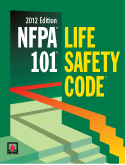
The 2012 NFPA 101 Life Safety Code has been made available for purchase on the NFPA web site:
http://www.nfpa.org/catalog/product.asp?pid=10112&title=2012-NFPA-101-Life-Safety-Code&category_name=&target_pid=10112&source_pid=10109&link_type=edition_change

This edition has changes that relate to egress paths, so they have used that theme on the cover design.


The 2012 NFPA 204 Standard for Smoke an Heat Venting (that smoke hatches / vents over the stage for the theatre folks) has also been updated and information can be found here:
http://www.nfpa.org/catalog/product.asp?pid=20412&title=2012-NFPA-204-Smoke-and-Heat-Venting&category_name=&target_pid=20412&source_pid=20412&link_type=edition_change

This describes the means of operations, quantity required, and recommended inspection procedures and scheduling.

If you have a Fire Curtain (many theatres) or Fire Doors (almost all buildings), then you need to fully understand the requirements for inspecting and testing these critical devices.  The 2010 NFPA 80 Standard for Fire Doors and Other Opening Protectives is the key to this part of your facility management.

This talks about door props, latches, crash bars, automatic closers, painting doors, and identifying Fire Doors.

Also of interest to many is the 2011 NFPA 70 National Electric Code which is everything you need to know, and them some, about electrical issues.  There are sections about the wire and cable we are permitted to use in the theatre environment, special requirements for dressing room lights and power receptacles, and many important items.  Product information can be found here:
http://www.nfpa.org/catalog/product.asp?pid=7011SB&title=Code-70-2011-National-Electrical-Code-NEC-Softbound&category_name=&target_pid=7011SB&source_pid=7008SB&link_type=edition_change

The companion book for those working on electrical equipment (almost all of us, whether we should or not) is the 2012 NFPA 70E Standard for Electrical Safety in the Workplace.  This addresses Lock-Out-Tag-Out (LOTO) procedures, ArcFlash, working 'HOT', and many other life-threatening activities when working with electricity.
http://www.nfpa.org/catalog/product.asp?pid=70E12&title=2012-NFPA-70E-Standard-for-Electrical-Safety-in-the-Workplace&category_name=&target_pid=70E12&source_pid=70E09&link_type=edition_change

Many of the NFPA publications have companion Handbooks that are available that break-down the codes and standards into manageable concepts with great graphics and explanations describing both proper and improper conditions.

Put these books in your budget.  Each one usually has a 3 to 5 year update cycle, so setting aside the funding for each of these should be a simple task.  If you need justification for the expenditures, then ask the powers that be how you are supposed to do your job without the actual books that define the Laws you must obey and the Standards to which you should adhere.

Warning:  Reading these books may induce drowsiness. Do not drive or operate heavy machinery while reading them.

Thursday, July 15, 2010

Brady Label Company Offers Free Handbook on Photoluminescent Marking

Free.  That's always helpful.  Even more helpful is the handy handbook that Brady has published that discusses the International Building Code (IBC), NFPA Life Safety Code, and LEED requirements for Emergency Egress signage and markings.


This objective guide outlines the various code sections, provides some graphics showing placement examples for photoluminescent items, and is very light on advertising hype.  Wow.  Real info not obscured by marketing schmooze.  That's refreshing.

Get yours at:  www.bradyid.com/bradyglo

Thursday, July 8, 2010

NFPA 80: Standard for Fire Doors and Protective Openings


Does this apply to your theatre?  If you have Fire Doors and/or Fire Curtains, then it most definitely applies if your locality has adopted this Fire Code.  This standard describes all of the requirements for testing and maintaining these critical fire and smoke containment elements.

How many times have you found stage doors physically propped-open with stage weights, chairs, desks, road cases, speakers, flag poles, kick-down door stops, rolled-up carpets, duct/gaffers tape, rope, or some other object?  This is clearly defined as a violation of the Fire Code and you should be able to instruct your staff as to why this is illegal and dangerous.

Do you know that Fire Doors and Fire Curtains must be inspected annually?  When was the last time yours were inspected?  What are you looking for when you do the inspection?  Which doors count as Fire Doors?  Overhead, hinged, sliding?  How fast (or slow) must the Fire Curtain close?  How often do they need to be tested?  What markings and signage are required?

Although the standard does not cover all of the aspects of Fire Doors and Fire Curtains - it does place most of the pertinent information in one location.  Like many things that the NFPA regulations cover, sometimes the answers are scattered across several different standards:
  • The routes that lead to the Fire Exits are discussed in NFPA 101: Life Safety Code.
  • The EXIT signs are addressed in NFPA 70: National Electric Code.
  • The Smoke Vents over the stage that work in conjunction with the Fire Curtain and Fire Doors are addressed in NFPA 204: Standards for Smoke and Heat Venting
  • The Fire Detection and Alarm System that may release electrically held Fire Doors, Fire Curtains, Smoke Vents, and Duct Shutters is addressed in NFPA 72: National Fire Alarm and Signaling Code
  • The smoke suppression system in the air ducts are defined under NFPA 90A: Standard for the Installation of Air-Conditioning and Ventilating Systems
Other related Codes:
  • Portable Fire Extinguishers are regulated by NFPA 10: Standard for Portable Fire Extinguishers
  • The Fire Sprinkler System is defined by NFPA 13
  • The Standpipe and Fire Hose requirements are in NFPA 14
The NFPA (http://www.nfpa.org/) publishes the standards and the books that discuss them, and they also present webinars to further educate people that have to understand and know how these items work. They have an upcoming webinar regarding NFPA 80 that you can sign-up for here:

You can subscribe to e-mail notices from the NFPA at:
http://www.nfpa.org/Catalog/RequestPrintCatalog.asp?src=catalog

Thursday, June 17, 2010

'Paint it black' isn't just a song by the Rolling Stones


Dontcha just hate those glaring  EXIT  signs?  Some director's sure do.  They'll go so far as having the stage crew cover them up, or better yet:  Paint over them!

This is a great way to get a big fat fine from your Fire Marshal or the AHJ (Authority Having Jurisdiction), as it is an obvious deliberate act.

While we're on the subject of  EXIT  signs, it is important that you file a written request for repairs whenever you find them damaged or otherwise disfunctional.  Common problems with  EXIT  signs are:
  • Lamps burned-out (LED replacement lamps are very cost-effective).
  • Glass / Acrylic letters broken or missing (leaving exposed bulb).
  • Failed Battery Back-up (you have to test these at prescribed intervals per the NFPA).
  • Broken or Missing Covers.
  • Sign units torn from the wall and hanging by wires.
  • Sign units missing (I see these in brand new buildings!)
  • Sign units over doors that are not really Fire Exits (I see these in brand new buildings!).
  • Sign units above / adjacent to overhead rolling doors.
  • Sign units in  Black Box  theatres covered by perimeter drapery tracks so that audience can't see them.
  • 'Light-pipe' designs that don't effectively pipe the light to the sign (internal obstruction or bad product design?).
  • Sign units that are obscured by pipes, ducts, tracks, junk, stuff, scenery, greenery, or other crud.