Showing posts with label Fire Doors. Show all posts

Tuesday, September 15, 2015

Fire Door Safety Week - Jim Morrison would be proud

Lori Greene, blogger at IDigHardware! is a great resource for all things relating to fire doors, and her most recent post at LinkedIn is no exception.  Check it out: https://www.linkedin.com/pulse/fire-door-safety-week-lori-greene-ahc-cdc-ccpr-fdai (or if you are not a LinkedIn member, go to: http://idighardware.com/2015/09/fire-door-safety-week/).  Some of Lorrie's past posts can also be found at The Building Code Forum http://www.thebuildingcodeforum.com/forum/blogs/u74/
 Get them Inspected, Detected, and if necessary, Rejected

Wednesday, July 31, 2013

Fire Door Safety - the UK Perspective

Reading British books and manuals can be challenging for us in the States - it's like we are two countries separated by a common language.  None-the-less, it can be informative and insightful to see how they do it across the pond.  When it comes to Fire Doors, the British Standards (BS) tend to follow the International ISO standards more closely that we do in the US, where we mostly link to ANSI (albeit, the US ANSI standards are gradually migrating to be aligned with the ISO standards as well).


The Guild of Architectural Ironmongers (that's "Architectural Hardware" in US English) has produced a set of guides that show good examples of Fire Door hardware and the associated signage.  Part 1 provides a general overview of Fire Door purpose and function, and Part 2 delves into the Maintenance required and provides good examples of problems you might look-out for.


You can download these two guide books here:
Part 1 - Overview: www.means-of-escape.com/sites/default/files/Fire & Escape Doors Part 1.pdf
Part 2 - Maintenance: www.means-of-escape.com/sites/default/files/Fire & Escape Doors Part 2.pdf

Friday, November 23, 2012

70th Anniversary of Cocoanut Grove Nightclub Fire

QUINCY, MA -- The National Fire Protection Association (NFPA) has teamed up with a number of public and private organizations to form The Cocoanut Grove Coalition to preserve the history of the monumental nightclub fire that took the lives of 492 people 70 years ago.

The deadliest nightclub fire in U.S. history occurred in Boston on November 28, 1942. The coalition includes the Boston Fire Department, the Boston Fire Historical Society, Boston Fire Museum, City of Boston Archives, Boston Public Library, and Massachusetts General Hospital.

According to Sue Marsh, the NFPA’s librarian, time was of the essence as all agreed that it was vital not to let more time pass before gathering additional resources, especially personal accounts from those impacted by the fire, “knowing that if we didn’t, things would be lost.”

Three videos in which Cocoanut Grove fire victims tell their stories exemplify the rich content that has come from these collections and this project.

All of the organizations represented in the coalition have material related to the fire. The intent of the project, according to Marsh, is to provide a single way to access all of the information as well as attract additional information that is out there but has not surfaced.

The NFPA library receives more requests related to Cocoanut Grove than any other incident.

“Unlike some earlier landmark fires, like the Triangle Shirtwaist Co. fire in New York in 1911, the Cocoanut Grove fire did not result in significant changes to NFPA codes,” writes Fred Durso, Jr. in the November / December 2012 issue of the NFPA Journal.

However, Boston and municipalities throughout the country underwent sweeping changes, including the reclassification of nightclubs and restaurants as places of public assembly, which is how they were already regarded in the Building Exits Code. The change introduced more stringent requirements for exits, emergency lighting, occupancy capacities, and other safety features.”
For more information, visit The Cocoanut Grove Fire website, www.cocoanutgrovefire.org.

Tuesday, November 20, 2012

OSHA Urges Black Friday Crowd Management

WASHINGTON -- OSHA is encouraging retail employers to take precautions to prevent worker injuries during Black Friday and other major sales events during the holiday season.


In 2008, a worker was trampled to death while a mob of shoppers rushed through the doors of a large store to take advantage of an after-Thanksgiving Day Black Friday sales event. OSHA recommends that retailers follow certain safeguards against this type of tragedy.

"Crowd control [management] and proper planning are critical to preventing injuries and deaths," said Dr. David Michaels, assistant secretary of labor for occupational safety and health. "OSHA urges retailers to adopt a crowd management plan during the holiday shopping season that includes a few simple guidelines."

Crowd Management plans should include:

• On-site trained security personnel or police officers.
• Barricades or rope lines for pedestrians that do not start right in front of the venue's entrance.
• Implementing crowd management measures well in advance of customers arriving at the event.
• Emergency procedures in place to address potential dangers.
• Explaining approach and entrance procedures to the arriving public.
• Not allowing additional customers to enter the venue when it reaches its Maximum Occupancy level (NO SRO for spaces with fixed seating).
• Not blocking or locking of exit doors.

A fact sheet outlining these and other safety measures is available at www.osha.gov/OshDoc/data_General_Facts/Crowd_Control.html.

A letter that OSHA has sent to major retailers about preventing crowd-related injuries can be viewed at www.osha.gov/asst-sec/blackfriday_letter_2012.html.

Comments on this subject from Dr. Michaels are available for radio stations to rebroadcast.  To download the audio file, or view a transcript, visit www.osha.gov/ooc/previous-focus.html.

A crowd management guide can be downloaded from: http://forms.valorsecurity.com/rs/smsholdingscorporation/images/vss_crowd_management_guide.pdf

The National Retail Federation has also published an Effective Crowd Management Guide that can be found at: http://www.nrf.com/effectivecrowdmanagement/2012/#/0

Friday, July 13, 2012

Keeping it all together

GRC (Not the Nutrition Guys) is a term commonly used to abbreviate Governance, Risk Management, and Compliance in the safety industry.  It is supposed to be an organizational cohesion that coordinates the efforts of everyone in a business so that guidance (Governance) is uniformly applied to all the sub-groups, and the subgroups share information and resources openly.

School Districts and Universities typically show significant separations between Risk Management (aka insurance claims management), Facility Safety (building and equipment maintenance), Public Safety (security), and personnel safety (actually training staff and students).

Interdepartmental separations occur, too.  Why is it the automotive shop student is given protective eye wear, while the theatre shop student has to provide his own?  The disparities are numerous and sometimes frustrating.  It affects the supply of safety information, safety goods, safety training, and maintenance.  When properly implemented, it answers the question of "Who's going to pay for this?"

For the governing administrators to do their jobs effectively, it is critical that they understand the wide variety of environments under their care.  In the theatre, this means that we have to pull-back the curtain and expose ourselves to the scrutiny of other non-theatre people.  This is hard.  We spend our entire careers trying to create magic and not let anyone outside of the theatre process know how it really works.  This is the exception.  When it comes to safety - everyone has to know and understand.

Don't stand there and tell everybody that your theatre is safe.  It's not.  This blogger sees brand new theatres that are constructed unsafely all of the time, and few new facilities come with any significant amount of operational safety training - everybody just brings their old bad habits with them and go on with little or no thought as to how they might make cultural changes to their work process.

In the 70's, the phone company ran a series of advertisements that said: "To communicate is the beginning of understanding."  The theatre plant is a perfect example of how important this is.  Maintenance workers need to access equipment and understand what is 'special' theatre equipment and know when they can work on it, and what is 'off limits' so that only specially qualified personnel are brought in to service it.  Good examples might be:
  • Dimmer Racks:  The air filters need to be cleaned regularly.  This may require that the power to the dimmer rack be disconnected because there may be live electrical parts within.  Chasing-off the cleaning crew and then not having the filters serviced may cause the dimmers to overheat and malfunction, or even catch fire.  At a minimum, it will shorten the life of the equipment.  This applies to the air filters for the workspaces around the theatre, too.  I've seen clogged air filters and air grilles in follow spotlight rooms, on stages, in dimmer rooms, and on dimmer racks - all preventable if the theatre staff would engage with the maintenance staff.
  • Stage Rigging:  Equipment must be inspected regularly by qualified personnel.  Most janitors and building maintenance crews are NOT trained or experienced enough to perform this task.  The maintenance of the stage rigging falls into this category.  The oil field rigging, construction rigging, or ship rigging backgrounds that some maintenance workers might have may be of some use, but without a knowledge of theatrical systems and how they are used, the resulting 'fixes' may be dangerous, incompatible with the theatrical operational needs, or aesthetically undesirable.
  • Fire Curtain, Smoke Vent, and Fire Doors:  Inspections and maintenance present challenges similar to the Stage Rigging.  Corrections that are not compatible with Fire Codes, Theatre Operations, and the Audience's enjoyment of the presentations must be prevented through the use of knowledgeable people.  Hire a consultant of you need one - this is where your Risk Management Department and or your Safety Office may be able to assist in securing the necessary funding.
Finding a balance with safety equipment provision policies, cost deferrals, and training budgets can only be achieved if the various participants can speak openly about the needs of their buildings and operations.  It also requires that the administrators truly understand and acknowledge just how dangerous a theatre plant is.  They care about bad brakes on buses, broken playground equipment, football helmets, and toxic fumes in the chemistry lab - why should your performing arts venue be any different?

Blogger Norman Marks on the Sustainable Business Forum site has a series of articles that help to explain GRC:  http://sustainablebusinessforum.com/node/59561

Thursday, March 29, 2012

Ring-toss in the dark anyone?

Ever try to find a door knob in  total darknes?   It's not so easy.


This product is designed to fit around most standard door operators and provide a clue as to where the exit is located.  Great for storage rooms, restrooms, and anyplace that there may not be emergency lighting installed.

Product resources:
GBC Safety Glow (www.gbcsafetyglow.com)
SafeGlow (www.safeglow.com)

Tuesday, February 21, 2012

Yeah, they have an app for that, too.

The iAuditor application for the iPad provides a convenient way to deploy checklists to all of your department heads and workers.  This customizable tool allows you to set-up check-lists, take photos, sign the document, and e-mail it so you have a clear record of inspections.

This app replaces paper-based reporting and allows the user to enhance reports with photographs showing compliance issues.  It also greatly reduces the likelihood of late submissions and falsified time-stamping.

With a smart interface to build forms, iAuditor allows for forms to be created on-the-fly from within the app, a form can be created and modified to suit departmental needs throughout the theatre plant.  By giving users the power to create their own audits, iAuditor can be applied to thousands of situations. This level of customization in auditing has never been seen before in the safety industry.


The iAuditor app has full GPS integration, too, so it can identify reports applicable to specific venues for large areas like theme parks, or be used on tour venue-to-venue.


An unlimited number of forms and checklists can be created using the form building screen, and templates can be shared between users. Ready-to-use audit forms are also available for free download from the SafetyCulture Secure Online Cloud.

Upon completion of an audit or checklist, the form can be quickly e-mailed as a PDF, which is compatible with almost any computer, smartphone, or tablet with a PDF reader application.

An audit checklist can be used by workers to ensure they are meeting their reporting and record-keeping requirements. Uses include:
  • Life Safety Code Inspections
  • Occupational Heath and Safety Codes
  • Governmental Reporting Requirements
  • Fire Prevention Checklists
  • Building Safety Checklists
  • Electrical Safety Checklists
  • Ladder Safety Checklists
  • Pre-Show, Intermission, and Post-Show Checklists for both FOH and Backstage
  • Shop, Storage, and Loading Dock Safety Audits
  • Vehicle Inspections
  • Emergency Lighting & Exit Sign Inspections
  • Fire Extinguisher Inspections
  • Fire Door Inspections
“Businesses all over the world are using technology to work smarter, not harder. We’ve listened to the people who are out in the field every day, and we’re committed to helping them work safer by using technology. With iAuditor, we’ve shown another example of this commitment; an incredibly versatile auditing and checklist app that is free to use and free to download.” Said Luke Anear, Managing Director of SafetyCulture Australia (www.safetyculture.com.au).

More information about the iAuditor app can be found at: www.safetyculture.com.au/iauditor/

Friday, August 19, 2011

NFPA Announces New Editions of Codes and Standards

Theatres are complex buildings, and they don't usually don't come with an Instruction Manual. You need to know what you can do, and what you can't do. And it usually helps if you can quote the authorities 'Chapter and Verse'.  This way people understand that it's not you that's being a pain in the butt, but that there really is a law, rule, or standard that defines the proper way to handle situations around the venue.

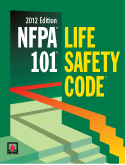
The 2012 NFPA 101 Life Safety Code has been made available for purchase on the NFPA web site:
http://www.nfpa.org/catalog/product.asp?pid=10112&title=2012-NFPA-101-Life-Safety-Code&category_name=&target_pid=10112&source_pid=10109&link_type=edition_change

This edition has changes that relate to egress paths, so they have used that theme on the cover design.


The 2012 NFPA 204 Standard for Smoke an Heat Venting (that smoke hatches / vents over the stage for the theatre folks) has also been updated and information can be found here:
http://www.nfpa.org/catalog/product.asp?pid=20412&title=2012-NFPA-204-Smoke-and-Heat-Venting&category_name=&target_pid=20412&source_pid=20412&link_type=edition_change

This describes the means of operations, quantity required, and recommended inspection procedures and scheduling.

If you have a Fire Curtain (many theatres) or Fire Doors (almost all buildings), then you need to fully understand the requirements for inspecting and testing these critical devices.  The 2010 NFPA 80 Standard for Fire Doors and Other Opening Protectives is the key to this part of your facility management.

This talks about door props, latches, crash bars, automatic closers, painting doors, and identifying Fire Doors.

Also of interest to many is the 2011 NFPA 70 National Electric Code which is everything you need to know, and them some, about electrical issues.  There are sections about the wire and cable we are permitted to use in the theatre environment, special requirements for dressing room lights and power receptacles, and many important items.  Product information can be found here:
http://www.nfpa.org/catalog/product.asp?pid=7011SB&title=Code-70-2011-National-Electrical-Code-NEC-Softbound&category_name=&target_pid=7011SB&source_pid=7008SB&link_type=edition_change

The companion book for those working on electrical equipment (almost all of us, whether we should or not) is the 2012 NFPA 70E Standard for Electrical Safety in the Workplace.  This addresses Lock-Out-Tag-Out (LOTO) procedures, ArcFlash, working 'HOT', and many other life-threatening activities when working with electricity.
http://www.nfpa.org/catalog/product.asp?pid=70E12&title=2012-NFPA-70E-Standard-for-Electrical-Safety-in-the-Workplace&category_name=&target_pid=70E12&source_pid=70E09&link_type=edition_change

Many of the NFPA publications have companion Handbooks that are available that break-down the codes and standards into manageable concepts with great graphics and explanations describing both proper and improper conditions.

Put these books in your budget.  Each one usually has a 3 to 5 year update cycle, so setting aside the funding for each of these should be a simple task.  If you need justification for the expenditures, then ask the powers that be how you are supposed to do your job without the actual books that define the Laws you must obey and the Standards to which you should adhere.

Warning:  Reading these books may induce drowsiness. Do not drive or operate heavy machinery while reading them.

Tuesday, July 19, 2011

Fire Doors 101


Associate Editor Kylie Wroblaski at Buildings.com posted a good article about Fire Doors:

www.buildings.com/Default.aspx?TabId=3334&ArticleID=10186

Take note of the
other posts on Fire Doors to see how they play in your theatre.


Make a pre-emptive strike against the spread of smoke and fire by keeping all fire doors closed and latched unless you are moving equipment or personnel through the door.  Do not prop fire doors open with chairs, microphone stands, stage weights, flag poles, desks, speakers, pianos, boxes, backpacks, wedges, flip-down props / stops, or by tying the handle to a nearby railing or wall.  If the door cannot close and latch on it's own, then it must be repaired.

Thursday, December 30, 2010

107th Anniversary of the Iroquois Theatre Fire

As we start the new year let's take a moment to look around our facilities with a fresh set of eye's.  It never ceases to amaze me at the number of obvious fire hazards I see when visiting theatres, gymatoriums, cafetoriums, and other assembly spaces.

It sometimes seems like we haven't learned anything since that fateful day in Chicago where over 600 people lost their lives.  These are the common fire code violations I frequently see that also fueled the Iroquois Theatre tragedy:
Learn not to burn.  Keep your Fire and Smoke Protective Systems working properly and accessible.

Here is a blog entry from Lori Green at Ingersol-Rand Security Technologies, the manufacturers of Von-Duprin Door hardware.  They make one of the few crash-bar exit systems that don't make a lot of noise - Great for Theatres!  http://idighardware.com/2010/12/iroquois-theater-fire/

Thursday, July 8, 2010

NFPA 80: Standard for Fire Doors and Protective Openings


Does this apply to your theatre?  If you have Fire Doors and/or Fire Curtains, then it most definitely applies if your locality has adopted this Fire Code.  This standard describes all of the requirements for testing and maintaining these critical fire and smoke containment elements.

How many times have you found stage doors physically propped-open with stage weights, chairs, desks, road cases, speakers, flag poles, kick-down door stops, rolled-up carpets, duct/gaffers tape, rope, or some other object?  This is clearly defined as a violation of the Fire Code and you should be able to instruct your staff as to why this is illegal and dangerous.

Do you know that Fire Doors and Fire Curtains must be inspected annually?  When was the last time yours were inspected?  What are you looking for when you do the inspection?  Which doors count as Fire Doors?  Overhead, hinged, sliding?  How fast (or slow) must the Fire Curtain close?  How often do they need to be tested?  What markings and signage are required?

Although the standard does not cover all of the aspects of Fire Doors and Fire Curtains - it does place most of the pertinent information in one location.  Like many things that the NFPA regulations cover, sometimes the answers are scattered across several different standards:
  • The routes that lead to the Fire Exits are discussed in NFPA 101: Life Safety Code.
  • The EXIT signs are addressed in NFPA 70: National Electric Code.
  • The Smoke Vents over the stage that work in conjunction with the Fire Curtain and Fire Doors are addressed in NFPA 204: Standards for Smoke and Heat Venting
  • The Fire Detection and Alarm System that may release electrically held Fire Doors, Fire Curtains, Smoke Vents, and Duct Shutters is addressed in NFPA 72: National Fire Alarm and Signaling Code
  • The smoke suppression system in the air ducts are defined under NFPA 90A: Standard for the Installation of Air-Conditioning and Ventilating Systems
Other related Codes:
  • Portable Fire Extinguishers are regulated by NFPA 10: Standard for Portable Fire Extinguishers
  • The Fire Sprinkler System is defined by NFPA 13
  • The Standpipe and Fire Hose requirements are in NFPA 14
The NFPA (http://www.nfpa.org/) publishes the standards and the books that discuss them, and they also present webinars to further educate people that have to understand and know how these items work. They have an upcoming webinar regarding NFPA 80 that you can sign-up for here:

You can subscribe to e-mail notices from the NFPA at:
http://www.nfpa.org/Catalog/RequestPrintCatalog.asp?src=catalog

Wednesday, April 14, 2010

The Big Red Word vs. the Little Green Man

SLATE author Julia Turner has a great article about the ongoing controversy between the common US  EXIT  sign and the internationally recognized ISO standard 'running man' sign.

You can read it here:  http://www.slate.com/id/2246107/

Saturday, April 3, 2010

Doors - Not just for Jim Morrison

Did you know that Fire Doors must be inspected annually? Yup, just like a Fire Curtain. Ref: 2010 NFPA 80, chapter 5.2.1. Most doors in an institutional building are Fire Doors, and an easy way to verify if a door is a Fire Door it is to look at the edge of the door leaf that is attached to the hinges.


If it is a Fire Door then you will see a small metal placard that says: FIRE DOOR and a bunch of other information about the door.  Look closely if you don't see it at first -- it may have been painted-over -- which is also a fire code violation. Ref: 2010 NFPA 80, chapter 4.2.2.

Inspections of Fire Doors are to check that the door is:
  • There (yes, I find them missing sometimes).
  • In proper operating condition (windows not broken, operating hardware all functioning).
  • The latches work (and aren't covered with gaffer's tape) - this is so the door can stay closed against the atmospheric forces of a fire.
  • The crash-bar (panic hardware) works and allows the door to open (no extra dead-bolts, pad-locks, or chains).
  • To make sure the door is not blocked on either side in a manner that would prevent it from being opened (things like pianos, stacks of chairs or desks, book cases, filing cabinets, cars, trucks, orchestra shells, etc.).
  • To make sure that the door is not propped open in a manner that would prevent it from being closed automatically (this means NO stage weights, NO chairs, NO desks, NO microphone stands, NO speakers, NO road cases, NO scenery, NO flag pole bases, NO . . . well, you should get the point).
  • To see if the automatic door closer hardware actually automatically closes the door (this is how you keep the smoke-in, air out, and keep the fire from spreading).  Disconnected, clamped, maladjusted, or broken closers must be repaired or replaced.
  • To  make sure that 'extra things' haven't been added to the door like kick-down door props (no, you cannot add these to Fire Doors!) or bailing wire to tie the door open.
  • And to check that the magnetic door release latch, if any, is properly working in conjunction with the Fire Alarm System (yes, this is the only legal way to prop a door open).

Friday, April 2, 2010

Alright, Bugsy - It's curtains for you!

Didja ever notice how Directors hate it when the theatre is suddenly flooded by light when a door is opened?  Yeah, it happens all the time.  It's really not their fault, it was the person designing the building that failed to recognize how disruptive this can be.

Denial is not just a river in Egypt.  It sometimes stems from a complete lack of admission that anyone would enter or leave a performance at anytime other than the designated time (yeah, like that's gonna happen!).

So what we get instead is folks trying to make-do.  They string-up curtain rods and cover the Exits to block the stray light.  Sometimes they cover the  EXIT  signs, too.  News Flash:  You cannot block or obscure a Fire Exit Door or Fire Exit Route.  Ref: 2010 NFPA 80, chapter 5.2.13.

Wednesday, February 17, 2010

Signs, signs, everywhere there's signs. Blocking-up the scenery, messin' up my mind.

Or so says the Five Man Electrical Band.  "Do this.  Don't do that. Can't you read the signs?"  Well, when the lights go out, it can be difficult to see exactly where everything is.  So the next time you're in the market for EXIT signs, NOTICE signs, CAUTION signs, DANGER signs, or any other informational signs, think about purchasing photoluminescent signs.  The look 'normal' in the light, and they keep on glowing when the lights go out.  Better quality signs will keep their glow for 12-24 hours.

Resources:  Just enter "Photoluminescent Signs" into a search engine and you'll get about a bazillion hits.  You can start with the vendors I've mentioned over the past week or so, too, as they are some of the major players in the market.

Saturday, January 30, 2010

Things that Glow-In-The-Dark

"Glow-Tape" is a staple of any theatre operation.  Its great for making all those things that are shin-busters, head-bangers, and fall-hazards.  How many times have you run-around five minutes before a show with a flash-light 'charging-up' the glow-tape?  Crazy, isn't it?  Especially if you have to do it again between each act.  And after awhile, it just won't 'take a charge' and you have to repace it.  What a pain.

Technology marches forward, and we in the theatre industry benefit from it.  Cool.  The problem is, what if no-one told you there was a better way?  Introducing high-tech glow tape that really does the jobStrontium-Aluminate (SrAl) is a chemical compound that is non-toxic, non-radioactive, and generally safe to work with.  It has the ability to be 'charged-up' (activated with UV light) and maintain it's glow for 8, 12, 24, even 48 hours (depending upon the exact formulation) after it is activated.  Some products will glow for up to 45 days.  Wow.  Good Stuff.  Very Good Stuff.  This ain't your father's glow tape.  Uh-uh.  And get this: A quality Strontium-Aluminate based product will typically last 20-30 years.  Oooh.  Ahh.  (And the crowd cheers.)


Over the next few posts I'm going to provide information about some of the great benefits and products that are out there that are extremely applicable to the performing arts environment.  Glowing stuff is not just for backstage, it's for many locations around your facility.

For starters, lets look at the great literature that is available.  Check out these web sites for some very good reading material:

PSA (Photoluminescent Safety Association): http://www.plsafety.org/
Check-out their various tabs, particularly the 'Codes' section.

PSPA (Photoluminescent Safety Products Association) http://www.pspa.org.uk/
Download their "PSPA Guide to the Use of Photoluminescent Safety Markings Part 1 Egress Markings in Stairwells" document on the Technical | Standards tab - it's a treasure trove of recommendations.

And for a commonly used reference in the US, visit the New York City Department of Buildings web site to get "Reference Standard 6-1 - Photoluminescent exit path markings"
www.nyc.gov/html/dob/downloads/pdf/rs_6-1.pdf

Wednesday, December 9, 2009

I've gotta get out of here!

I frequently find tables in the aisles in theatres, and occasionally in exit vestibules, which are both clear violations of fire codes, but this one was particularly troublesome: This was a laboratory table with a heavy top like a pool table, so it was not easy to move or toss aside. Even if you did move it, where would you put it that wasn't still blocking an exit aisle? Especially if there were people crowding toward the exit. On the other side of the door was the real surprise: They had an upright piano cross-wise of the doors (and a trash can, too!). You would have to pull the piano away from the door, open the door, turn the piano and shove it out the door (assuming there was a crush of people behind you also wanting to get out.)

The amazing part of this is that I have found three pianos blocking fire exits in less than two months - and one of them was a grand piano! Billy Joel would not be happy! Not to mention the Fire Marshal!

Oh yeah, did you notice that the EXIT signs did not have functioning lamps?

Friday, October 9, 2009

National Fire Prevention Week - Keep Those Egress Paths Clear

I found this house right EXIT blocked, so blocked in fact, that I could not open the door.

So I went around to the outside and I found this:

I'm not sure how they got the chairs packed in there like that, but it sure was a serious violation of the Life Safety Code if I ever saw one.

NOTE to anyone working in theatres: YOU CAN'T DO THIS! It endangers everyone in the building.

Tuesday, October 6, 2009

Natonal Fire Prevention Week - A look back at the Iroquois Theatre Fire

Much hasn't changed in the last 100 years - I still routinely find Fire Exits blocked, dysfunctional Fire Curtains, and flammable scenery, props, and costumes in every theatre I visit.  These were the very cause of the Iroquois Theatre fire. Think about it!
Asbestos Fire Curtain in an older theatre

For a bit of perspective, visit the following web sites a read-up on this disaster
Please, think twice before you set the stage for another disaster.

Monday, October 5, 2009

National Fire Prevention Week: October 5-9, 2009


In honor of National Fire Prevention Week I thought it would be good to take a look back at one of the worst Theatre Fires that ever struck this industry. The Iroquois Theatre Fire in Chicago was integral in forcing the development of improved Fire Safety Codes and Building Codes. Although the facility was largely constructed from fire retardant materials, the fire started with scenery that was not fire-proof, the fire and smoke containment system failed, and many of the emergency egress routes were blocked.  In just a few moments, hundreds of people were killed.  A true tragedy in every sense of the word.

For those that are inclined to learn from the past, and sadly, realize that many theatres today suffer from EXACTLY THE SAME CONDITIONS, please read through some of the material at the following links:


Does your Fire Curtain work properly?  Does it meet all the current codes?  When was it last inspected?  When was it last tested?  Where are your records?  Where are your spare parts?  Where is the wiring diagram for the motorized hoist (if it has one)?  If you don't know the answer to any of these questions, find out!

If you need help getting this system properly designed and operating, please contact me.  Assessment of these critical Life Safety Systems is important to your staff, patrons, and performers alike.