Showing posts with label competent person. Show all posts

Thursday, February 4, 2016

OSHA issues fines for Stage Manager killed in blast

2016-02-03 -Last summer we reported about an incident in west Texas where a Stage Manager was killed when a pyrotechnics storage bunker for an outdoor show exploded  (http://theatresafetyblog.blogspot.com/2015/08/fireworks-storage-building-explodes-and.html)

OSHA has now investigated the incident and issued a statement:  “A 21-year-old worker, with three months of work experience under her belt, lost her life because Texas Panhandle Heritage Foundation failed to provide appropriate training and protective equipment to workers handling pyrotechnics.”

That was the assessment of Elizabeth Linda Routh, OSHA’s area director in Lubbock, Texas, after a young worker was fatally injured last summer while taking an inventory of the pyrotechnics for an outdoor musical production at the Palo Duro Canyon State Park in Canyon, Texas.

After an inspection following the fatality, OSHA issued six serious citations for failing to train workers on the use of explosives, provide fire retardant clothing, perform a hazard assessment and develop a written hazard communication program.

Proposed Penalties: $42,000

Texas Panhandle Heritage Foundation is a performing arts employer.

------------------

Although $42,000 may not seem like much for a human life, this assessment of the situation opens the door for civil litigation so the victim's family can pursue further compensation.

Tuesday, September 1, 2015

Friday, July 13, 2012

Keeping it all together

GRC (Not the Nutrition Guys) is a term commonly used to abbreviate Governance, Risk Management, and Compliance in the safety industry.  It is supposed to be an organizational cohesion that coordinates the efforts of everyone in a business so that guidance (Governance) is uniformly applied to all the sub-groups, and the subgroups share information and resources openly.

School Districts and Universities typically show significant separations between Risk Management (aka insurance claims management), Facility Safety (building and equipment maintenance), Public Safety (security), and personnel safety (actually training staff and students).

Interdepartmental separations occur, too.  Why is it the automotive shop student is given protective eye wear, while the theatre shop student has to provide his own?  The disparities are numerous and sometimes frustrating.  It affects the supply of safety information, safety goods, safety training, and maintenance.  When properly implemented, it answers the question of "Who's going to pay for this?"

For the governing administrators to do their jobs effectively, it is critical that they understand the wide variety of environments under their care.  In the theatre, this means that we have to pull-back the curtain and expose ourselves to the scrutiny of other non-theatre people.  This is hard.  We spend our entire careers trying to create magic and not let anyone outside of the theatre process know how it really works.  This is the exception.  When it comes to safety - everyone has to know and understand.

Don't stand there and tell everybody that your theatre is safe.  It's not.  This blogger sees brand new theatres that are constructed unsafely all of the time, and few new facilities come with any significant amount of operational safety training - everybody just brings their old bad habits with them and go on with little or no thought as to how they might make cultural changes to their work process.

In the 70's, the phone company ran a series of advertisements that said: "To communicate is the beginning of understanding."  The theatre plant is a perfect example of how important this is.  Maintenance workers need to access equipment and understand what is 'special' theatre equipment and know when they can work on it, and what is 'off limits' so that only specially qualified personnel are brought in to service it.  Good examples might be:
  • Dimmer Racks:  The air filters need to be cleaned regularly.  This may require that the power to the dimmer rack be disconnected because there may be live electrical parts within.  Chasing-off the cleaning crew and then not having the filters serviced may cause the dimmers to overheat and malfunction, or even catch fire.  At a minimum, it will shorten the life of the equipment.  This applies to the air filters for the workspaces around the theatre, too.  I've seen clogged air filters and air grilles in follow spotlight rooms, on stages, in dimmer rooms, and on dimmer racks - all preventable if the theatre staff would engage with the maintenance staff.
  • Stage Rigging:  Equipment must be inspected regularly by qualified personnel.  Most janitors and building maintenance crews are NOT trained or experienced enough to perform this task.  The maintenance of the stage rigging falls into this category.  The oil field rigging, construction rigging, or ship rigging backgrounds that some maintenance workers might have may be of some use, but without a knowledge of theatrical systems and how they are used, the resulting 'fixes' may be dangerous, incompatible with the theatrical operational needs, or aesthetically undesirable.
  • Fire Curtain, Smoke Vent, and Fire Doors:  Inspections and maintenance present challenges similar to the Stage Rigging.  Corrections that are not compatible with Fire Codes, Theatre Operations, and the Audience's enjoyment of the presentations must be prevented through the use of knowledgeable people.  Hire a consultant of you need one - this is where your Risk Management Department and or your Safety Office may be able to assist in securing the necessary funding.
Finding a balance with safety equipment provision policies, cost deferrals, and training budgets can only be achieved if the various participants can speak openly about the needs of their buildings and operations.  It also requires that the administrators truly understand and acknowledge just how dangerous a theatre plant is.  They care about bad brakes on buses, broken playground equipment, football helmets, and toxic fumes in the chemistry lab - why should your performing arts venue be any different?

Blogger Norman Marks on the Sustainable Business Forum site has a series of articles that help to explain GRC:  http://sustainablebusinessforum.com/node/59561

Saturday, March 24, 2012

Save Your Canadian Bacon


www.actsafe.ca is a great web site to visit.   actsafe  is a leader in promoting workplace health and safety in British Columbia’s performing arts and motion picture industries. This site has a monthly Safety newsletter, Library resources, Training courses, Posters, and much more.  This information covers a wide range of safety topics.  Good info regardless of your nationality!

Thursday, February 9, 2012

Indiana OSHA Fines Three Entities

[Updated - 2014-03-31 - 12:50PM CDT]
February 8, 2012.  Following investigations into the stage canopy collapse at the Indiana State Fair on August 13th of last year, IOSHA has filed fines against the canopy provider Mid-America Sound Corporation, The IATSE Local 30 that provided labor to erect the stage, and the Indiana State Fair Commission, sponsors of the event.

The IOSHA order against Mid-America Sound claims that MAS knowingly allowed the stage to be erected without cross bracing and failed to provide adequate documentation for the erectors.  MAS said that they will challenge the findings and is already producing documents that they had previously withheld

UPDATE 2014-03-31:  Mid-America Sound has agreed to pay a $50,000 fine for safety violations and has also agreed to additional staff training and a new safety plan for future events..  Indiana’s Occupational Safety and Health Administration (IOSHA) orginally levied a fine of $63,000 against the company.

Michael Moon, attorney for Mid-America Sound, released the following statement via Borshoff, the company’s PR firm:

“On March 20, 2014, Mid-America Sound Corporation and the Department of Labor entered into an Agreed Entry resolving litigation that resulted from IOSHA's citations issued to Mid-America following the events of August 13, 2011 at the Indiana State Fair.  While Mid-America contested the appropriateness of the citations and made no admission of any wrongdoing by entering into the settlement, Mid-America believed that it was important to move forward in a cooperative effort with IOSHA and to avoid the costs and expenses of further litigation.”

Of particular concern was that IOSHA fined the Labor Union Local 30, which is not an employer, and claimed that they were acting as an employer of the stage hands that were injured and killed.  This charge is being vigorously disputed by the Union as they say they were only act as an agent to arrange labor resources.  However, unlike almost all other union offices, this local's officers actually operated a business entity that directly paid the laborers that were contracted to the Indiana State Fair.  If this charge is upheld, it will have a significant impact on the way this Local, and possibly others, is operated.

The State Fair Commission's fines were minimal and they were charged with failing to have an effective emergency plan in-place.  The fines were minimal because the State Fair Commission did not have any employees that were significantly injured in the event.

A little perspective:

This is just the beginning of the legal process.  The report from the forensic engineering firm that is analyzing the failed structure has not yet been published, nor has any other official assessments of the event.  The IOSHA orders are only addressing one small segment of the incident:  The labor relationship between the Employers and the Workers with regard to their safety.  It is not IOSHA's place to address injuries to the general public or the over-all failure of the State Fair Commission that administered the event.  To date, there have been numerous law suits and over 100 tort claims filed that are seeking compensation for the damages and loss of life.

This blogger was told that Sugarland, the band that was to have played that night, had first right of refusal to not play (although they did not assert that right), and they did not have the right to override the State Fair Commission and demand to play.  Being willing to play is not the same thing as demanding to play.  This places the burden of responsibility back on the State Fair Commission for not cancelling the show and clearing the fairgrounds in a timely manner.  It's always a contentious position to be in when one state agency is penalizing another state agency.

Interviews with the Indiana State Police Troopers that were in the scene before the storm struck also said that they were fully expecting the Commissioners to cancel the show in light of the incoming weather front, and were dismayed when the announcer only said that the show would be delayed.  Had they known that the State Fair management team was not securing the site, they could, and probably would have overridden their decision and forced the issue for the sake of public safety.  Unfortunately, that announcement was made hours too late, and the brunt of the storm plowed through the area just moments later.

Additional Resources:

Indy Star article:
http://www.indystar.com/article/20120208/NEWS05/120208016/Agency-cites-State-Fair-union-stage-collapse

Prior Blog Posts:
http://www.theatresafetyblog.blogspot.com/2012/01/alert-notice-on-temporary-structures.html
http://www.theatresafetyblog.blogspot.com/2012/01/indiana-legislature-posts-bill.html


Friday, January 20, 2012

Indiana Legislature posts Bill requiring outdoor stage inspections

The Indiana State Legislature posted a bill to require all venues statewide to have outdoor stage structures inspected by an engineer or other qualified person.  More information at:
http://theatreface.ning.com/profiles/blogs/follow-up-to-indiana-state-fair-stage-canopy-collapse

This may provide a model of other states to go-by as they develop their new regulations.  Maybe we can prevent a repeat of the last few summers of show disasters.

Wednesday, February 2, 2011

RigCalc for smart phones and on the web

D2 Flying Effects are riggers that fly people and things.  They are also pretty savy programmers, too.  At their web site you can find RigCalc and a bevy of other software tools for making life on the fly rail easier.

They also have a Rigging Math Primer online at: www.d2flying.com/riggingmath/

There are a bunch of really handy online calculators at: www.d2flying.com/RigCalc.html

The smart phone app looks like this (2 of 4 screens shown):


A really handy app for stackin' steel bricks.
If they add a batten loading calculator to get the needed weight it will be great.

Just $9.99.  Where to get it: http://www.androidzoom.com/android_applications/productivity/rigcalc_qmvr.html

Also available for the iPhone and Blackberry with links at: http://www.rigcalc.com/
Other related blog entries:

http://theatresafetyblog.blogspot.com/2010/03/in-god-we-trussed-all-others-pay-499.html
http://theatresafetyblog.blogspot.com/2009/12/jr-clancy-releases-irigging-application.html
http://theatresafetyblog.blogspot.com/2010/06/arena-rigging-app-for-iphone.html

Tuesday, February 1, 2011

"Well, here's another nice mess you've gotten me into!" - Ollie

StageCo has been sued in Texas state court by Christie Lites for damages sustained when a 90-foot lighting tower erected by StageCo collapsed prior to a nationally televised motocross event at the historic Fort Worth Stockyards in June, 2009.
Christie Lites, Plaintiff in the lawsuit styled Cause No. 096 246397 10; Christie Lites Dallas, Inc. d/b/a Christie Lites v. StageCo U.S., Inc.; In the 96th Judicial District Court in and for Tarrant County, Texas alleges that StageCo was negligent in the design and construction of the tower. A specialized lighting array and equipment owned by Christie Lites, elevated atop the tower was totally destroyed.

Christie Lites CEO Huntly Christie commented that it was extremely fortunate that the collapse of the tower occurred just days prior to the scheduled event, with only physical damage to the lighting array, grandstands, and general admission area.  Had the tower collapsed during the event it might have caused severe injury, and possible loss of life, to spectators and field personnel.  The tower collapse was initiated by wind gusts that blew as a storm passed through the area.  Engineering analysis of the structure, tie-downs, and other safety precautions have not been made public.

Christie Lites has an outstanding safety record in the industry.  Prior to this incident it has never had to take legal action against a fellow industry vendor.  Attempts to resolve this matter amicably have been frustrated since the filing of the lawsuit.

Tom Bilsen, Stageco Operations Manager states: “Stageco takes its responsibilities very seriously, we are fully insured, so all parties will be appropriately protected and reimbursed.  “Following this unfortunate incident we initiated our own investigation; there are multiple parties and multiple factors under consideration such as unpredicted wind gusts, and most importantly, there were no injuries. This law suit relates to the collapse of one of eight towers days before the event which took place as planned.  We anticipate the judges will need time to resolve this complex matter.”

Christie Lites is seeking actual damages in excess of $500,000, and to ensure that this type of incident does not jeopardize public safety for future events, $1,000,000 in punitive damages.  Actual damages likely include the actual cost and the lost revenue cost of the destroyed lighting equipment, and the extensive overtime labor required to clean-up the wreckage, ship-in new equipment, and set-up for the show a second time under a very compressed time-table.  There was no mention at this time of the costs or law suits by other show support vendors like those supplying the viewing stands, seating, or other nearby damaged structures.  The disassembly of a toppled structure is very hazardous, as well, and requires special precautions against additional worker injuries during the salvage and clean-up operations.

Inquiries or witnesses to the event should be directed to Scott Douglas Cunningham, The Cunningham Law Firm, 7500 San Felipe, Suite 1010, Houston, Texas; (713) 273-8950, counsel for Christie Lites.

The past few years have had numerous show tents, towers, and other venue structures that have been toppled by high winds and inadequate anchorage.  It should be no surprise that towers, canopies, and tents must be well secured against high winds.  Failure to provide adequate anchorage and structural integrity for temporary structures has resulted in numerous deaths, injuries, and significant property damage.

It is imperative that promoters, staging companies, and other industry professionals take note of the risks involved with outdoor events when it comes to the unpredictability of natural forces.  It is essential that someone be stationed where they can scan the horizon for threatening weather activity, have continuous access to weather radar reports, and have the authority to call a show and evacuate an event site should inclement conditions arise.  Event evacuation plans must have time-tables that estimate the amount of time required for an orderly egress from the venue, as you don't want patrons caught out in the open on the way to transportation or more robust shelters.
Physical threats to the public and staff alike include:
  • Hail ( a 4" ball of ice can do a lot of damage!  This blogger was witness to the 1995 MayFest Hail Storm in Fort Worth where hundreds of people could not get to safe shelter and were pelted by enormous ice balls - see: http://en.wikipedia.org/wiki/1995_Mayfest_Storm)
  • Wind (can blow people over and blow chairs, tables and other loose items into people)
  • Lightning (can knock-out power and emergency power, and electrocute people)
  • Rain (can provide a path for power to electrify nearby items, cause flooding of pathways and egress routes, and result in canopy collapses, cars and people being carried away in rushing water)
  • Dust (kicked-up by wind, can temporarily blind and cause panic due to reduced visibility)
An any of these weather threats can instigate crowd mentality panic and rushing for exits, which, in turn, can cause people to push, shove, and possibly crush someone that has fallen into the path of the surging crowd.  Proper Emergency Crowd Control Planning is a must for outdoor events.

Related Posts:
http://theatresafetyblog.blogspot.com/2010/07/wind-gust-uplifts-festival-tent-six.html
http://theatresafetyblog.blogspot.com/2010/01/weather-safety-for-outdoor-venues.html
http://theatresafetyblog.blogspot.com/2009/08/1-dead-and-75-injured-at-canadian-music.html
http://theatresafetyblog.blogspot.com/2009/07/another-stage-tower-collapse.html

Friday, December 24, 2010

Make Angles Fly - Not 'Make Angels'

Photo courtesy of Abel Aluart
'Tis one of the the seasons for churches to attempt high profile productions, and a few schools, too.  If it involves flying people, angels, Santa Claus, Peter Pan, or anybody else, then it is REALLY DANGEROUS.  Hire professionals to do the work so that everybody makes it home for Christmas.  The November-December issue of Church Production magazine has a really great article about Hall Associates Flying Effects (http://www.flyingfx.com/) installing a computer-controlled system for three-dimensional flying of actors.  This article by Jim Kumorek discusses many important points about this type of very specialized rigging.  You can find it here:  http://www.churchproduction.com/go.php/article/on_a_wing_and_a_prayer_and_a_wire?p=1

Remember: Your frequent flier miles won't do you any good if you're being shipped in a box.

Wednesday, December 22, 2010

Hemp House Rigging - The 'old fashioned way'

Dawn Wilfong, 24, works the fly rail and hauls a piece of coiled rope during a performance of “A Christmas Carol.”  (c) 2010 Photo by Thomas Slusser (For The Virginian-Pilot)

Check out this great story about one of the few remaining active rope rigging houses.  http://hamptonroads.com/2010/12/behind-scenes-wells-theatre-rare-find

This wooden pin-rail is in a theatre built in Texas in the 1920's.

One of the most common scenarios this blogger sees is equipment like this that has never been serviced in 50-70+ years.  The Loft Blocks are sometimes made of dry-rotted wood or sand-cast pigiron, either of which could fail under load without notice.  The ropes need constant review and regular replacement, too, as they weaken with age and abrasion.  As you can see in the second picture, the facility operators in this building don't understand the concept of counterweighting the batten loads, so everything is stage-heavy.  The battens are dead-hauled (bull-dogged) up, and if the tie-off fails or the fly crew looses their grip, then the batten and load will will come crashing to the stage.

Other potential problems are retro-fitted belaying pins:   I've found rebar, conduit, gas pipe, broom handles, steel spikes, and other odd items used in place of the correct items.  Some hemp-house facilities are 'hand-me-down' theatres that started-out as the High School Auditorium, then was the Middle School, and is now part of the Elementary School facility.  Not only is the equipment MORE DANGEROUS, but it is located where young children not familiar with the hazard potential can pull-out the belaying pins and/or untie the rope lines.

It is extremely important that the operators and staff fully understand how the fly system works and what safety precautions must be taken when loading and operating the system.

Wednesday, December 15, 2010

OSHA Cranes and Derricks Standard as iPhone App

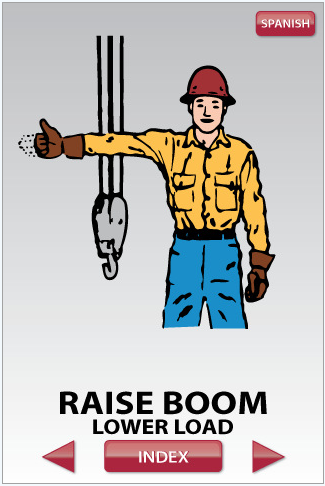
December 14 - The Specialized Carriers & Rigging Association (SC&RA - http://www.scranet.org/) now offers a free mobile phone application for instantly accessing all necessary crane hand signals. The new application is available in the iTunes App Store (http://itunes.apple.com/us/app/crane-operator-hand-signals/id403502739?mt=8) and Blackberry App World (http://appworld.blackberry.com/webstore/content/18294?lang=en).

Every signal included is compliant with the new OSHA Cranes and Derricks Standard, Appendix A to Subpart CC of Part 1926-Standard Hand Signals. Each signal is shown graphically so that operators can quickly and easily reference the appropriate signal for each command. All signals are available in English and Spanish.

This new app is intended for use before entering the workplace. SC&RA does not encourage the use of smartphones on jobsites.  The Specialized Carriers & Rigging Association (SC&RA) is an international trade association of more than 1,300 members from 43 nations. Members are involved in specialized transportation, machinery moving and erecting, industrial maintenance, millwrighting, crane and rigging operations, manufacturing and rental.

The U.S. Department of Labor‘s Occupational Safety and Health Administration (OSHA) released a historic new standard, addressing the use of cranes and derricks in construction and replacing a decades old standard. The significant number of fatalities associated with the use of cranes and derricks in construction and the considerable technological advances in equipment since the publication of the old rule, issued in 1971, led the Labor Department to undertake this rulemaking.
 
The final rule was published on August 9, 2010 by the Federal Register and became effective 90 days later.  The rule can be found at http://www.osha.gov/FedReg_osha_pdf/FED20100809.pdf.

A copy of the regulatory text is available at: http://www.osha.gov/doc/cranesreg.pdf

Tuesday, September 7, 2010

Rigging Report Card - Pass? -or- Fail!

J.R. Clancy Company, one of the largest Stage Rigging component manufacturers in the world, has introduced a new posting section on their Facebook photos page.  It is a Bad Rigging Photo of the Week.  Log in and check it out.  Scary is an understatementwww.facebook.com/JRClancy

These pictures, and similar ones I post here in the Theatre Safety Blog, and those that I show in my USITT workshops "What's Wrong With This Picture?" are all intended to make you take pause and think about what may be lurking in your theatre, or that theatre that you may be traveling to for your next show.

These types of poorly thought-out assemblies really go to show you how important it is to have your facility inspected by an objective party.  Things that you may casually dismiss because you've come to see them every day may actually be a really serious hazard.  A fresh set of eyes can be key to getting a wake-up call.  Independent Consultants (insert shameless plug for my company, Teqniqal Systems, here) can be a great resource for this as they work objectively and are not interested in selling you new equipment, just seeing that you are aware of the current state of affairs with your facility.

The NFPA 80 Standard for Fire Doors and Other Opening Protectives, 5.2, requires that you have your Fire Curtain inspected annually, so this is a good time to have the rest of the rigging system inspected as well.  If your facility is operating under OSHA (State plan, or Federal plan, or even if it's not - it's still a really good idea), then you are required to have your Rigging Systems inspected annually.

Not to be forgotten, your Smoke Vents (an important part of the Fire Curtain System along with the Fire Doors) must be tested annually.  Your Smoke Vents should have rigging that facilitates the operation from the stage floor level (don't tell me you are going to go to the grid iron deck to open them to clear-out extraneous atmospheric effects or summer heat).  This smoke hatch rigging (be it mechanical or motorized) must be inspected semi-annually as a part of the Smoke Vent inspections.  Ref: NFPA 204 Standard for Smoke and Heat Venting, 12.4.3.5.

Ask a lot of questions about the report that you are going to pay for.  What does the inspection include / exclude?  How long will it take?  Who should be present?

"Will you shut me down if I fail?" is a common question I get.  My answer is this:  I'm just the messenger.  I report what I see and put it in context so you and your administration can understand it and the potential consequences.  I quote relevant building or safety codes, if applicable to the situation.  I am not the AHJ (Authority Having Jurisdiction).  You are my customer, so I report to you.  Your building condition is your business, so you can act on the report as you deem appropriate.  Hopefully, you will get the broken stuff fixed.

One thing at a time:  Typically, a Rigging System Safety Assessment report will NOT include any design or specific engineered solutions.  It is only a report on the conditions.  Why is this excluded?  At the time I contract with you to perform the inspection, I will usually only know the general nature of the building layout and rigging systems, I will not yet have seen any of the actual conditions - how could I possibly estimate the cost of my services to (re)design a fix for what I have not seen?

"How much does this cost?" is the battle cry of the administrators.  Don't be smug and ask them why it matters - or retort "Would they rather pay for a funeral?"  That's not the question.  "How much does it cost?" means that they need to find the funds and understand the value.  When they understand what this inspection entails, why it is important and/or necessary, then they can address the funding issue. You can help the process by remaining calm and professional.  Drama Queens can alienate the administrators if they present more bluster than facts.  A good consultant can help you to educate them about this investment / recurring annual maintenance cost.

A little help on your part can be useful, too.  Do some research with your insurance provider, safety department, or even your regional / national arts groups.  Sometimes they have grant money available to help defray the cost of this work.  If it involves facility planning (that is what this is - planning for necessary improvements) and/or safety, the money is usually out there.

The answer, like so many things in life, is: "It depends."  You should be suspicious of anyone that offers you a "Free" or "Discounted" rigging assessment.  It will likely be worthless and largely incomplete.  This type of work takes time.  Time = Money.  No one makes a living on 'free'.  At a minimum, you are paying for the person's travel time and expenses to and from your facility, the time on-site actually testing, inspecting, observing, interviewing, photographing, and documenting what they find.  They then must organize all their findings into a coherent report that addresses your specific facility and put the information in context.  Each item should be clearly tagged with recommendations as to what needs removed, repaired, replaced, re-designed, etc.  The time expended writing the report can be many times the hours spent on-site.

The "It depends" factor is complex:  Do you have a walk-on gridiron?  Or do I need to rent a man-lift to go up a bazillion feet?  Do you have 1, 2, or 3 loading galleries?  How many line sets do you have?  How many are motorized?  Is this a Union House?  Am I inspecting just the Rigging System, or am I doing the Drapes,  Fire Curtain, Smoke Vents, and all the scabbed-on rigging at the Tormentors, Beam Electrics, Speaker Clusters, and Orchestra Shell components?  Is there an Orchestra Pit Lift?  Am I inspecting Fire Doors, Fire Alarms, and/or any other Life Safety Systems?

Be efficient with your investment.  Is your facility part of a School or College District that has multiple venues?  If so, then seriously consider having all the venues inspected under one contract.  No, this isn't a money grab.  It is about identifying the sources of problems.  If your inspector can assess 2, 4, or a dozen facilities as a whole, then the report you receive should be more manageable.  The areas of common concern can be discussed once, and the unique 'features' of each system or building can be addressed individually.  This allows you and your administration to see items that are systemic in nature and those that are local in nature.  A big picture that speaks to all of the district's Theatre Safety needs can be a powerful impetus for change and improvements.

Once the report is written and submitted, you will have a chance to read it and discuss it with your staff.  Don't shoot the messenger.  Understand that the inspector does not have an agenda, they are not 'out to get you', they are not seeking to close-down your theatre.

As Sergeant Joe Friday would say: "Just the facts, ma'am."  Don't interpret the safety report as an indictment of your operations or management.  It is not.  However, it may point to some areas of your operations that could use improvement.  The most dangerous part of a rigging system is the people that operate it.  Use your rigging safety report to improve your policies, methodologies, and show preparation.  Use it to plan repairs, upgrades, and service.  Learn from it.

Questions?  Call me or write me!

Wednesday, July 21, 2010

2010 LDI Show Schedule Available - Sign-up NOW!

The LDI International trade show has grown over the years to include much more than just stage lighting. You will also find sound, rigging, staging, video, projection, special effects, and thousands of tools to do your job more efficiently and safely. This year's show in Las Vegas (aka: Lo$t Wage$) runs Monday, October 18 thru Sunday, October 24 at the Las Vegas Convention Center.

Of particular interest is the growth of show production safety workshops being presented by ETCP trainers:
  • Stage Rigging Fundamentals - two days (L27)
  • Ohm's Law and Order: Essential Electrical Training - two days (L28)
  • Left Brain Rigging: An A-Z on Math and how it applies to rigging - two days (L29)
  • Left Brain Rigging Calculator - build your own spreadsheets for critical repetitive calculations (L30)
  • Tomcat USA: Safely Building the Beast - truss system design, fall arrest systems, ground supported systems - two days (L31)
  • Keep your Stage Rigging Happy & Healthy AR01)
  • Math for Riggers (Made Simple) (AR02)
  • System Integration Trends in Automation (AR03)
  • Is your GO Button Putting You at Risk? - Motor Control Technology & Risk Mitigation (ES01)
  • SIL Explained: Understanding European and Control System Safety Standards (ES02)
  • Fire Safety Curtain Systems - Closing the Door on Smoke (ES09)
  • Hook Up and Go! - Is Climbing on a Portable Structure Really That Easy? (ES10)
  • All About the ETCP (FS01)
  • ETCP paper & Pencil Exams at LDI - actually take the test(s)!
And of course, there will be lots of blinky lights and glittery things both inside and outside the convention center. Be There. See a Show. Have Fun. Learn Something.

More info at: www.ldishow.com/

Tuesday, July 20, 2010

Honesty is always the best safety policy: CM Steps-up to the Challenge

Well known electric chain hoist manufacturer Columbus-McKinnon (Commonly known as 'CM') issued a statement reminding customers about a known safety issue with some of their hoists.  This Safety statement pertains to questions about brake retaining pins on the company's hoists.

The company statement follows:

"There has been some information circulating recently within the Entertainment Industry in reference to brake retaining pins on Columbus McKinnon Hoists. This issue goes back to 2006 when Columbus McKinnon issued the attached notice concerning a small number of brake retaining pins for the following hoists: Prostar, Shopair, Shopstar, Shophoist, Model CPS, Budgit Series, Coffing SLC, Little Mule SLM and Yale SAL powered chain hoists built between February 2005 and April 2006. The serial numbers that were affected had the last two letters of RP, RQ, RR, RS, RT, RU, RV, RW, RX, RY, RZ, SA, SB, SC and SD.


"Columbus McKinnon did notify at that time every distributor that purchased the affected hoists and sent out replacement pins. Our distributors did a good job of notifying their customers and having the pins replaced. However it has come to our attention that some end users of the affected hoists may not have replaced the brake pins. If you have a hoist model and serial number listed above and the brake pin has not been replaced, please contact Columbus McKinnon directly at the number below.


Dean Sullins or Lee Gregor
1-800-634-4647
dean.sullins@cmworks.com
lee.gregor@cmworks.com"

Support manufacturer's that support your safety (and the gear above your heads).  CM LoadStar Hoist School is a great way to get first-person training (www.cmcodepot.com/cm-ettraining.aspx) regarding the hoists used by many of the touring show professionals around the world.

Visit CM's Entertainment Industry hoist web site (www.cm-et.com/) for more information.  These are versions of their commercial hoists that are specifically tailored to the unique needs of the show production industry.

Monday, July 19, 2010

Pink Gets Banged-up In Fall From Flying Harness. "Steel barrier-1 Pink-0"

July 16, 2010, Nuremberg, Germany.  According to Pink (30-year-old Alecia Beth Moore), she was "a little embarrassed" and apologized to her fans who had shown up to see her perform. She said that the reason she fell is she was incorrectly clipped to a safety harness.  She went on to say that she had no serious problems, no broken bones, just a pretty bruised ego.

The star slipped out of a harness which was supposed to carry her across the crowd.  Instead, she was dragged off the stage and into a into a crowd control barricade.  There is a video clip shot by an audience member (http://www.thedailybeast.com/video/item/pink-falls-on-stage) of her two assistants helping her into the harness just before the incident, but their costumes blocked the view of the procedure.  As she was about to be pulled into the air over the fans, she raises her arms into the air to make an "X", possibly a 'no-go' sign for the fly crew.  She is then pulled forward and you can here her say "no-no..." and then the harness comes loose and drags her off of the stage along with two assistants that appear to be entangled in the fly lines.  You see her stage right assistant being flung off the stage and into the audience.  There is no news available regarding injuries to the assistants or audience members.

Pink was reported to have argued a bit about leaving during her concert, but was obviously in pain and knew that all medical precautions had to be taken (smart girl!).  She climbed back up onto the stage so that fans could see she was not injured seriously, and was then taken by ambulance to a nearby hospital for observation.  The concert in was halted.

On the way to the hospital she twittered: "To all my nurnberg fans - I am so so so sorry to end the show that way. I am embarrassed and very sorry. I'm in ambulance now but I will b fine,".

"Didn't get clipped in2 harness correctly, drug me off stage, fell in2 barricade. Getting xrays. I hope it at least looked cool!!!"

Later, she wrote on Twitter: "Nothing's broken, no fluid in the lungs, just seriously sore."

She also apologized to fans for having to cut her concert short.

She later tweeted: "Full steam ahead people.  No pain, no gain. or is it no brain, no pain? either way, I will be on that stage, even if I have to crawl."

Carey Hart, Pink's husband, blogged to fans: "Fyi, @pink is out of the hospital and all good. Just got the sh** kicked out of her by the barrier. Steel barrier-1 Pink-0"

Saturday, June 12, 2010

Free Arc-Flash Training Seminars

Burnt to a crisp.  Not Good.  Bad JuJu.  Learn how to recognize Electrical Hazards and work safely around them. NFPA 70E Safety in the Electrical Workplace requires personnel training for anyone that works on electrical power.  Arc Flash events occur very rapidly and if you are caught in the plasma blast you can be seriously injured, burnt, or killed.  Learn about the proper Personal Protective Equipment (PPE) needed to do the job.  Think this doesn't apply to you?  Think again.  Dimmer Racks / Panels and Motor Control Centers (MCC) for Orchestra Lifts and Automated Stage Rigging Winches can have very large Voltage and Amperage power services, as do Road Show Disconnect Panels.

Example of an Arc Flash Warning Label
Note: Each label is custom made to match the requirements of the device to which it is attached.
If you don't see a label similar to this on your equipment, find-out why it isn't there.

Free is good.  Find-out more at: AVO Training Institute:  http://www.electricalpowerengineering.com/avo-arc-flash-hazard-analysis-seminar.php

Other info:
Mike Holt:  http://www.mikeholt.com/mojonewsarchive/NEC-HTML/HTML/What-is-Arc-Flash~20040512.php
Arc Flash Information Resource Center: http://www.arcflash.me/index.php
Occupational Health & Safety magazine:  http://ohsonline.com/articles/2009/08/03/arc-flash-training-ppe.aspx
Arc Flash Labeling Handbook: http://www.duralabel.com/ppc/free-arc-flash-book-g.php
Easy Power Support Resources: http://www.easypower.com/arc_flash/arc_flash_resource_center.php

Tuesday, June 8, 2010

Arena Rigging App for the iPhone


OK, you can use it other places you need a bridle, too (except horseback riding).  It's still handy, just as long as you use it on the ground and don't try to use your iPhone while straddling an iBeam.  Keep that loose stuff ON THE GROUND!  It's also handy for checking your ability to do these calculations IBM -(It's Better Manually) for the ETCP Rigging Tests.

Where to get it:  http://www.bridleapp.com/

Other related blog entries:
http://theatresafetyblog.blogspot.com/2010/03/in-god-we-trussed-all-others-pay-499.html
http://theatresafetyblog.blogspot.com/2009/12/jr-clancy-releases-irigging-application.html

Thursday, June 3, 2010

Fall Protection Training Site by Miller

Every once in awhile you come across a really good training site that has good FREE info.  The Miller Fall Protection web site is one of these.  Go to:  www.millerfallprotection.com/training and take a break and watch the webinar you'll find under "Free ANSI Standards Training Video".  It's well preseted and has the facts organized.

Monday, May 24, 2010