Showing posts with label Exit Paths. Show all posts

Wednesday, November 28, 2012

Killer Show - Not your normal night out.

Author and Lawyer John Barylic has summarized the events that led up-to and resulted in the 2003 fire that killed 100 people at The Station Nightclub in East Warwick, Rhode Island.  His book summarizes the mounds of documents researched on behalf of the families of those injured and killed that fateful night.

The story of the fire, its causes, and its legal and human-tragedy aftermath, is one of human lives put at risk by petty economic decisions – by a band, club owners, promoters, building inspectors and product manufacturers. Any one of those decisions could have potentially avoided the tragedy. Together, however, they formed a fatal critical mass.

Information about his book can be found at www.killershowbook.com


The site include reviews of the book, photos from the event, and links to interviews.
Photo Credit:  Daniel Davidson (Copyright holder)
Other interesting links about this event:

NIST Disaster and Failure Studies:
www.nist.gov/el/disasterstudies/fire/station_nightclub_fire_2003.cfm

NFPA Case Study: Nightclub Fires:
www.nfpa.org/assets/files/pdf/research/case_study_nightclub_fires.pdf

Fire Engineering Magazine:
www.fireengineering.com/articles/print/volume-165/issue-1/features/station-nightclub-fire-revisiting-lessons-p1.html

Tuesday, November 20, 2012

OSHA Urges Black Friday Crowd Management

WASHINGTON -- OSHA is encouraging retail employers to take precautions to prevent worker injuries during Black Friday and other major sales events during the holiday season.


In 2008, a worker was trampled to death while a mob of shoppers rushed through the doors of a large store to take advantage of an after-Thanksgiving Day Black Friday sales event. OSHA recommends that retailers follow certain safeguards against this type of tragedy.

"Crowd control [management] and proper planning are critical to preventing injuries and deaths," said Dr. David Michaels, assistant secretary of labor for occupational safety and health. "OSHA urges retailers to adopt a crowd management plan during the holiday shopping season that includes a few simple guidelines."

Crowd Management plans should include:

• On-site trained security personnel or police officers.
• Barricades or rope lines for pedestrians that do not start right in front of the venue's entrance.
• Implementing crowd management measures well in advance of customers arriving at the event.
• Emergency procedures in place to address potential dangers.
• Explaining approach and entrance procedures to the arriving public.
• Not allowing additional customers to enter the venue when it reaches its Maximum Occupancy level (NO SRO for spaces with fixed seating).
• Not blocking or locking of exit doors.

A fact sheet outlining these and other safety measures is available at www.osha.gov/OshDoc/data_General_Facts/Crowd_Control.html.

A letter that OSHA has sent to major retailers about preventing crowd-related injuries can be viewed at www.osha.gov/asst-sec/blackfriday_letter_2012.html.

Comments on this subject from Dr. Michaels are available for radio stations to rebroadcast.  To download the audio file, or view a transcript, visit www.osha.gov/ooc/previous-focus.html.

A crowd management guide can be downloaded from: http://forms.valorsecurity.com/rs/smsholdingscorporation/images/vss_crowd_management_guide.pdf

The National Retail Federation has also published an Effective Crowd Management Guide that can be found at: http://www.nrf.com/effectivecrowdmanagement/2012/#/0

Thursday, March 29, 2012

Ring-toss in the dark anyone?

Ever try to find a door knob in  total darknes?   It's not so easy.


This product is designed to fit around most standard door operators and provide a clue as to where the exit is located.  Great for storage rooms, restrooms, and anyplace that there may not be emergency lighting installed.

Product resources:
GBC Safety Glow (www.gbcsafetyglow.com)
SafeGlow (www.safeglow.com)

Thursday, March 22, 2012

Way-finding: Which way out?

If I was in a hurry to get out of some place, like, say . . WHEN THERE IS A FIRE, I'd want to:
A:  Be able to read the evacuation map in a hurry,
B:  Be able to read it in the dark with the power out.

Hand Scrawled Fire Evacuation Route Sign (8 1/2 x 11)
Here's a good idea that can help those things come together:
  • Make the map large enough that you can read it without squinting.
  • Make the lettering bold and easy to read, say 1/4" (6mm), minimum (no hand-written letters either).
  • Place a "YOU ARE HERE" arrow or marker that is REALLY BIG AND OBVIOUS.
  • Then print the sign on clear film and mount it over a sheet of  photoluminescent  material.
That's where the folks at EvacMap (www.evacmap.com) can fix you right up.  They can do your graphics for you, or you can provide your own.  Their  photoluminescent  sign frames are just what you need.
Another source for these types of sign frames is Accuform Signs (www.Accuform.com).  They also offer special sign frames for  Severe Weather Plans .  Another time when the power may not be functioning and you don't want to evacuate the building, but instead, you want to relocate everyone to a safer location within the building.

Tuesday, February 21, 2012

Yeah, they have an app for that, too.

The iAuditor application for the iPad provides a convenient way to deploy checklists to all of your department heads and workers.  This customizable tool allows you to set-up check-lists, take photos, sign the document, and e-mail it so you have a clear record of inspections.

This app replaces paper-based reporting and allows the user to enhance reports with photographs showing compliance issues.  It also greatly reduces the likelihood of late submissions and falsified time-stamping.

With a smart interface to build forms, iAuditor allows for forms to be created on-the-fly from within the app, a form can be created and modified to suit departmental needs throughout the theatre plant.  By giving users the power to create their own audits, iAuditor can be applied to thousands of situations. This level of customization in auditing has never been seen before in the safety industry.


The iAuditor app has full GPS integration, too, so it can identify reports applicable to specific venues for large areas like theme parks, or be used on tour venue-to-venue.


An unlimited number of forms and checklists can be created using the form building screen, and templates can be shared between users. Ready-to-use audit forms are also available for free download from the SafetyCulture Secure Online Cloud.

Upon completion of an audit or checklist, the form can be quickly e-mailed as a PDF, which is compatible with almost any computer, smartphone, or tablet with a PDF reader application.

An audit checklist can be used by workers to ensure they are meeting their reporting and record-keeping requirements. Uses include:
  • Life Safety Code Inspections
  • Occupational Heath and Safety Codes
  • Governmental Reporting Requirements
  • Fire Prevention Checklists
  • Building Safety Checklists
  • Electrical Safety Checklists
  • Ladder Safety Checklists
  • Pre-Show, Intermission, and Post-Show Checklists for both FOH and Backstage
  • Shop, Storage, and Loading Dock Safety Audits
  • Vehicle Inspections
  • Emergency Lighting & Exit Sign Inspections
  • Fire Extinguisher Inspections
  • Fire Door Inspections
“Businesses all over the world are using technology to work smarter, not harder. We’ve listened to the people who are out in the field every day, and we’re committed to helping them work safer by using technology. With iAuditor, we’ve shown another example of this commitment; an incredibly versatile auditing and checklist app that is free to use and free to download.” Said Luke Anear, Managing Director of SafetyCulture Australia (www.safetyculture.com.au).

More information about the iAuditor app can be found at: www.safetyculture.com.au/iauditor/

Friday, August 19, 2011

NFPA Announces New Editions of Codes and Standards

Theatres are complex buildings, and they don't usually don't come with an Instruction Manual. You need to know what you can do, and what you can't do. And it usually helps if you can quote the authorities 'Chapter and Verse'.  This way people understand that it's not you that's being a pain in the butt, but that there really is a law, rule, or standard that defines the proper way to handle situations around the venue.

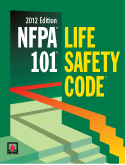
The 2012 NFPA 101 Life Safety Code has been made available for purchase on the NFPA web site:
http://www.nfpa.org/catalog/product.asp?pid=10112&title=2012-NFPA-101-Life-Safety-Code&category_name=&target_pid=10112&source_pid=10109&link_type=edition_change

This edition has changes that relate to egress paths, so they have used that theme on the cover design.


The 2012 NFPA 204 Standard for Smoke an Heat Venting (that smoke hatches / vents over the stage for the theatre folks) has also been updated and information can be found here:
http://www.nfpa.org/catalog/product.asp?pid=20412&title=2012-NFPA-204-Smoke-and-Heat-Venting&category_name=&target_pid=20412&source_pid=20412&link_type=edition_change

This describes the means of operations, quantity required, and recommended inspection procedures and scheduling.

If you have a Fire Curtain (many theatres) or Fire Doors (almost all buildings), then you need to fully understand the requirements for inspecting and testing these critical devices.  The 2010 NFPA 80 Standard for Fire Doors and Other Opening Protectives is the key to this part of your facility management.

This talks about door props, latches, crash bars, automatic closers, painting doors, and identifying Fire Doors.

Also of interest to many is the 2011 NFPA 70 National Electric Code which is everything you need to know, and them some, about electrical issues.  There are sections about the wire and cable we are permitted to use in the theatre environment, special requirements for dressing room lights and power receptacles, and many important items.  Product information can be found here:
http://www.nfpa.org/catalog/product.asp?pid=7011SB&title=Code-70-2011-National-Electrical-Code-NEC-Softbound&category_name=&target_pid=7011SB&source_pid=7008SB&link_type=edition_change

The companion book for those working on electrical equipment (almost all of us, whether we should or not) is the 2012 NFPA 70E Standard for Electrical Safety in the Workplace.  This addresses Lock-Out-Tag-Out (LOTO) procedures, ArcFlash, working 'HOT', and many other life-threatening activities when working with electricity.
http://www.nfpa.org/catalog/product.asp?pid=70E12&title=2012-NFPA-70E-Standard-for-Electrical-Safety-in-the-Workplace&category_name=&target_pid=70E12&source_pid=70E09&link_type=edition_change

Many of the NFPA publications have companion Handbooks that are available that break-down the codes and standards into manageable concepts with great graphics and explanations describing both proper and improper conditions.

Put these books in your budget.  Each one usually has a 3 to 5 year update cycle, so setting aside the funding for each of these should be a simple task.  If you need justification for the expenditures, then ask the powers that be how you are supposed to do your job without the actual books that define the Laws you must obey and the Standards to which you should adhere.

Warning:  Reading these books may induce drowsiness. Do not drive or operate heavy machinery while reading them.

Thursday, August 18, 2011

This is Our Summer of Discontent - Storm at Pukkelpop Festival Kills 5, Injures Over 140

2011-08-18 - Mother Nature racked-up another one today in Hasselt, Belgium.  A sever storm with high winds, hail up to 1/2" diameter, and LOTS of water made a shambles of the festival grounds and surrounding area.  There are trees uprooted and broken like toothpicks (and these are BIG trees, too), and reports of at least four stages and many tents destroyed.  Early pictures and videos show shredded tents, bent metal, and a crowd management nightmare.  More pictures here.
There were an estimated 60,000 people attending the shows, so there were few places to get in out of the down-poor and wind.  Many of those places were of questionable structural integrity being tents and portable buildings.  This was the first day of a three-day festival, and the venue was turned into mud and flooded areas in less than ten minutes.  Promoters attempted to bring-in mobile cranes to lift some of the damaged structures, but they had to postpone doing so because the heavy cranes were sinking into the soft ground.

One of those who watched a tent collapse was Laura Elegeert, 17, of Saint-Nicolas, Belgium.  She said "It was utter confusion, mass panic. People were trying to get out of this tent that collapsed by using their pocket knives and cutting holes in the fabric."

At a news conference Friday, Hasselt officials and festival organizers described weather conditions at the event's opening day as exceptional and said weather forecasters had not predicted a storm of that intensity.
The Belgian weather service refused to give the exact speed of the wind, saying only that the storm was "violent."
Images of the stage wings toppled-over show huge flat sail-like surfaces and no apparent counter-ballasts to secure the framework.
Skin, the lead singer of Skunk Anansie, which was performing on the main stage when the storm hit, described the chaos on the band's Facebook page. He said "a burning hot sunny day turned into a mini-hurricane."
"(A) tower fell onto our truck, we had to run for our lives mid-set as hail hit the stage and the wind began to tear it to pieces," he wrote. "This was the scariest moment I have ever seen or felt in my 20 years of being an artist."
ABC News coverage:  http://abcnews.go.com/Entertainment/wireStory?id=14334480
Arial photos of the festival grounds the following day.  This really shows the scale of the event and the broad swath of downed trees, tents, and staging. http://album.hbvl.be/foto-album/p/3/ravage-na-drama-op-pukkelpop-luchtbeelden.aspx
This festival, and others in the region have incurred deaths in the past.  In 2000, nine people were crushed to death and 43 injured during a Pearl Jam concert, and last year 20 were killed and 342 injured during the Love Parade Festival in Duisberg, Germany.
Summer's not over yet, so let's all be careful out there!  Do you have a clear plan for a weather event?  Where to go?  Who to meet? Who to Call? When to 'call' the show?

Thursday, July 14, 2011

OSHA approves alternate definition for means of egress standard.


The U.S. Department of Labor’s Occupational Safety and Health Administration (OSHA) has recognized the International Code Council’s (IIC) 2009 International Fire Code (IFC) as an alternate compliance option for means of egress in its Occupational Safety and Health Standards.  The ICC petitioned the federal agency asking for its code to be recognized as a way for an employer to demonstrate compliance with the OSHA Exit Routes and Emergency Management (formerly called Means of Egress) requirements.

“In jurisdictions where the 2009 International Fire Code is enforced, employers whose buildings have been inspected and approved can use that approval to demonstrate compliance with OSHA requirements (Section 1910, Subpart E, Standard 1910.35),” International Code Council CEO Richard P. Weiland said. “We thank OSHA for recognizing the safety attributes of our code as well as the professional expertise and science that goes into the code’s development.”

The Council’s petition, which started in 2004, was offered on behalf of ICC Members and all jurisdictions that adopt and enforce I-Codes; building and fire code enforcement officials; and building owners and managers with facilities that are maintained in compliance with the I-Codes.

“Allowing the IFC regulations to be used for exiting buildings will save money by eliminating the need to demonstrate compliance with dual regulations, and by avoiding potential construction modifications due to conflicting codes,” Weiland said.  “OSHA’s recognition demonstrates collaboration between the agency and those who share the mission of protecting the health and safety of building occupants.”

The U.S. Department of Defense and the U.S. General Services Administration supported the Code Council’s petition along with local and state jurisdictions, including New York state, Jefferson County, Colorado, and the city of Hampton, Virginia.

Twenty-seven states with approved Occupational Safety and Health plans also will have to update their plans to incorporate the new rule within six months of the final rule’s publication.  The final rule was published in June and takes effect July 8, 2011.

The International Code Council (www.iccsafe.org), a membership association dedicated to building safety, fire prevention, and energy efficiency, develops the codes used to construct residential and commercial buildings, including homes and schools. Most U.S. cities, counties and states choose the International Codes, building safety codes developed by the International Code Council.  The International Codes also serve as the basis for construction of federal properties around the world, and as a reference for many nations outside the United States.

Thursday, December 30, 2010

107th Anniversary of the Iroquois Theatre Fire

As we start the new year let's take a moment to look around our facilities with a fresh set of eye's.  It never ceases to amaze me at the number of obvious fire hazards I see when visiting theatres, gymatoriums, cafetoriums, and other assembly spaces.

It sometimes seems like we haven't learned anything since that fateful day in Chicago where over 600 people lost their lives.  These are the common fire code violations I frequently see that also fueled the Iroquois Theatre tragedy:
Learn not to burn.  Keep your Fire and Smoke Protective Systems working properly and accessible.

Here is a blog entry from Lori Green at Ingersol-Rand Security Technologies, the manufacturers of Von-Duprin Door hardware.  They make one of the few crash-bar exit systems that don't make a lot of noise - Great for Theatres!  http://idighardware.com/2010/12/iroquois-theater-fire/

Tuesday, October 5, 2010

Blocked Fire Exits - Live at 10 o'clock

When it comes to Fire Exits, it is amazing what I find in them.  Above is an exit corridor with a big sign, a large screen rear projection TV, and other miscellaneous stuff.  Please take the time to put this junk somewhere that it does not block an exit!

Thursday, July 15, 2010

Brady Label Company Offers Free Handbook on Photoluminescent Marking

Free.  That's always helpful.  Even more helpful is the handy handbook that Brady has published that discusses the International Building Code (IBC), NFPA Life Safety Code, and LEED requirements for Emergency Egress signage and markings.


This objective guide outlines the various code sections, provides some graphics showing placement examples for photoluminescent items, and is very light on advertising hype.  Wow.  Real info not obscured by marketing schmooze.  That's refreshing.

Get yours at:  www.bradyid.com/bradyglo

Monday, June 21, 2010

Concert Rigging in Michigan Collapses During Setup - 10 Injured, 2 Hospitalized

During the set-up of a concert stage in the Silverdome stadium in Pontiac, Michigan, 10 workers narrowly escaped death as tons of sound, lighting, drapes, scenery, and trussing collapsed.  Emergency responders from the Pontiac Fire Department were called to the Silverdome around 4:30 p.m. Saturday, June 19th, 2010, before the show started.  The initial call indicated that the domed roof had collapsed, but upon arrival they found that the concert staging framework had caved-in.  Workers recall seeing trusses being hoisted that appeared to be overloaded just be for the mayhem broke loose.  Two workers spent the night on a local hospital for observation.


Some of the most complete coverage if the incident can be found here:
http://www.theoaklandpress.com/articles/2010/06/20/news/local_news/doc4c1d46926f61b990888627.txt
http://www.theoaklandpress.com/articles/2010/06/21/news/local_news/doc4c1fd417969fc357332898.txt

There was no damage to the concert facility as the collapsed rigging was ground supported.  The concert was to be A R Rahman's Jai Ho Concert: The Journey Home World Tour.  Rahamn is best known for his musical score for the movie Slumdog Millionaire.

The concert was cancelled and will be rescheduled.  OSHA was on-site almost immediately to assess the damage and determine the cause of the accident.  With over 150 workers on or near the stage at the time of the collapse, it took some time to determine if anyone was buried under the tangle of wrecked scenery.

The summer tour season is a busy time of year for many stage hands, so for all of you out there bustin' your butt to make a living - keep a close watch on your co-workers and guests.  Don't hesitate to recognize potential hazards and notify the proper authorities if you see unsafe conditions.  Your life depends on it!

Procedural items to remember:
  • Preplan your show - Know your rig - and all the weight that is attached to it.
  • Verify your show - Use load cells to measure truss hoist loads.
  • Have spotters on radios monitoring (this means listening, too) all viewpoints during lifts.
  • Always clear the stage and call for quiet during lifts.
  • Have a gathering point (muster point) pre-arranged just in case there is an emmergency like this.  Don't have people wondering around afterward until you have a clear head count.
  • Where bright clothes during set-up and strike (it makes it easier to find the body) - save your blacks for the show.
  • Wear your PPE:  Boots, Hard Hat, Safety Glasses, Gloves, at a minimum, knee pads, and fall protection harness as required.
  • Don't work when you are worn-out or heat exhausted.  This seriously impairs your judgement.  Stay hydrated.

Monday, June 14, 2010

Just how do you get out of here?


OSHA has some handy items on their web site, and one of them is the eTools.  This page discusses Evacuation Plans and Procedureswww.osha.gov/SLTC/etools/evacuation/index.html.  Within it you will find a section about Exit Routeswww.osha.gov/SLTC/etools/evacuation/egress_construction.html.

Saturday, April 3, 2010

Doors - Not just for Jim Morrison

Did you know that Fire Doors must be inspected annually? Yup, just like a Fire Curtain. Ref: 2010 NFPA 80, chapter 5.2.1. Most doors in an institutional building are Fire Doors, and an easy way to verify if a door is a Fire Door it is to look at the edge of the door leaf that is attached to the hinges.


If it is a Fire Door then you will see a small metal placard that says: FIRE DOOR and a bunch of other information about the door.  Look closely if you don't see it at first -- it may have been painted-over -- which is also a fire code violation. Ref: 2010 NFPA 80, chapter 4.2.2.

Inspections of Fire Doors are to check that the door is:
  • There (yes, I find them missing sometimes).
  • In proper operating condition (windows not broken, operating hardware all functioning).
  • The latches work (and aren't covered with gaffer's tape) - this is so the door can stay closed against the atmospheric forces of a fire.
  • The crash-bar (panic hardware) works and allows the door to open (no extra dead-bolts, pad-locks, or chains).
  • To make sure the door is not blocked on either side in a manner that would prevent it from being opened (things like pianos, stacks of chairs or desks, book cases, filing cabinets, cars, trucks, orchestra shells, etc.).
  • To make sure that the door is not propped open in a manner that would prevent it from being closed automatically (this means NO stage weights, NO chairs, NO desks, NO microphone stands, NO speakers, NO road cases, NO scenery, NO flag pole bases, NO . . . well, you should get the point).
  • To see if the automatic door closer hardware actually automatically closes the door (this is how you keep the smoke-in, air out, and keep the fire from spreading).  Disconnected, clamped, maladjusted, or broken closers must be repaired or replaced.
  • To  make sure that 'extra things' haven't been added to the door like kick-down door props (no, you cannot add these to Fire Doors!) or bailing wire to tie the door open.
  • And to check that the magnetic door release latch, if any, is properly working in conjunction with the Fire Alarm System (yes, this is the only legal way to prop a door open).

Friday, April 2, 2010

Alright, Bugsy - It's curtains for you!

Didja ever notice how Directors hate it when the theatre is suddenly flooded by light when a door is opened?  Yeah, it happens all the time.  It's really not their fault, it was the person designing the building that failed to recognize how disruptive this can be.

Denial is not just a river in Egypt.  It sometimes stems from a complete lack of admission that anyone would enter or leave a performance at anytime other than the designated time (yeah, like that's gonna happen!).

So what we get instead is folks trying to make-do.  They string-up curtain rods and cover the Exits to block the stray light.  Sometimes they cover the  EXIT  signs, too.  News Flash:  You cannot block or obscure a Fire Exit Door or Fire Exit Route.  Ref: 2010 NFPA 80, chapter 5.2.13.

Saturday, March 27, 2010

The Stage Manager's Ready List

I recently attended a theatre festival that had many great portfolio and model set presentations by Directors, Stage Manager's, Sound Designers, Lighting Designers, Set Builders, and many other talented individuals.  It's great to see such a high level of creativity by those coming into the business!

Of particular interest were the presentations by the Stage Managers.  Each had presentations of check-lists, pre-show make-ready items, post-show to-do lists, and every other kind of list imaginable, except one: Emergency Procedures.  So the next time you're "making a list and checking it twice," take a moment and think about what you might / should do in the cases of:
  • Extreme weather conditions (flood, tornado, hurricane)
  • Injuries (both to crew and performers -- and to audience members)
  • Security (campus lock-down or evacuation)
  • Building Emergency (fires, earthquakes, broken water pipes, roof collapse, power outage)
  • Equipment failure (fire curtain comes-in accidentally, or maybe won't go-out, tripped sprinkler head - do you know where the shut-off valve is located?)

If you don't have a plan, then it is quite typical that you may end-up with total chaos on your hands.  How you handle an emergency can greatly influence the likelihood of injuries being sustained by the building occupants as they try to deal with the situation.

Have a plan (actually, several plans).  Post them.  Practice them.

Good places to hang-out:
Control Booth:  www.controlbooth.com
Stage Manager's Association www.stagemanagers.org
Production Manager's Forum www.foghouse.com/PMForum/index.html

Sunday, February 14, 2010

Don't be bored with the baseboard

Baseboard material that has a photoluminescent strip molded right into it.  Good stuff in hallways, restrooms, dressing rooms, lobbies - just about anywhere you don't want to stumble-around in the dark.  This is particularly handy for new construction or renovations, as you generally are going to have a baseboard anyway, so you might as well do it right from the get-go.  The nice thing about having it built-in is that it won't get scuffed-off or scratched-up.

Resources:
Safe Glow (www.safeglow.com/PhotoluminescentProducts.LowLevel.Hallway.html)
Glow Tech (www.glowtechinc.com/glowing_baseboard_strip.htm)

Tuesday, February 9, 2010

Light me up!

So, what happens when the lights go out?  Do the emergency lights lights come on?  Are there any emergency lights?  In the storage room?  In the restroom?  In that back hallway, trap room, or catwalk?  Maybe.  Maybe not.  When was the last time that battery pack or generator was tested?  Hard to say. The installation of photoluminescent tubes or solid bars in fluorescent light fixtures is one way to have an "always ON" back-up.  They work after earthquakes, floods, or just about anything else.

The sleeve solution:  It is a plastic sleeve that is designed to slide over the glass tube of the lamp and be continuously charged by the light.  When the power shuts-off, the tube keep on glowing.  This is a cheap, zero maintenence solution.  You can use on just one lamp, or on many, depending how much light you need. 

One caveat:  This will ever-so-slightly change the color content of the light, so if you are using this in a dressing room, make-up room, costume shop, or paint shop, be aware of what this will do to your color rendering.  This shouldn't be a big deal, as you will typically only have one or two of the lamps in the whole room equipped this way.

Resources:
Luna Glow Luminite Light Sleeves  (www.lunaglow.com.au/sleeve.htm)
Shat-R-Shield Lamps (www.shattershield.com/catglowlamps.html)

The Bar Solution:

These are just thick bars of photoluminescent material that magnetically attach to the inside of a metal light fixture.  Simple to install, and don't have to be swapped-out when the lamps are changed.  You can use one or many per light fixture.  Being so close to the light source, these bars get maximum charge from the lamps and as a result glow really brightly as soon as the lights go out.

Resource:
SafeGlow (http://www.safeglow.com/PhotoluminescentProducts.Emergency.L..html)

An alternate solution is to appply photoluminescent tape or paint to the interior of the light fixture.

Cavaet:  Make sure that anything you put into a light fixture is designed to take the heat and doesn't violate any building codes!  These solutions are not yet qualified to provide code compliant emergency lighting, but they are still way better than nothing.

Saturday, February 6, 2010

Strangers in the dark . . do be do be do

Ever fumble in the dark for a light switch?  Don't need to do that no more! This plate is available from GlowTech (http://www.glowtech.com/).

 
Another version just screws-down over your existing switchplate cover:

This is the Find-A-Light strip by Arnev (http://www.arnev.com/Glow-in-the-Dark-Strips.html).  Of course, you could just place four strips of photoluminescent tape around the lightswitch, too.  Or, you could coat a regular switchplate cover with glow-in-the-dark paint.  If you need to label the switches (which is always a good idea! - ever have folks flippin' swiches "just to find-out what they do?" ), then using clear P-Touch type tape labels over the glow tape, strip, or switchplate will allow the lettering to be legible with a bit of a backlight effect.

No more finger pokin' in the dark, OK?

Thursday, February 4, 2010

Painting the town

As wonderful as glow-in-the-dark photoluminescent tape is, sometimes it is just easier to paint something.  Odd shaped or textured surfaces, or just bulk application frequently makes it more economical to do this, too.  Another reason to paint rather than stick, is that the finish is more permanent.  Tape-based products vary in the type of base material they are made from, and adhesive backing provided.  In high traffic areas (for hands, too, not just feet) tapes can sometimes snag on the edge and either create a trip hazard and/or a peeling problem.  Curious vandals may want to re-appropriate your carefully applied glow-tape, too.

When looking for glow-in-the-dark photoluminescent paints, it is highly recommended that you verify that the products meet ot exceed the New York City MEA 451-05-M-2 Standard for LL26 Safety Evacuation Markings.  These aren't the only certification for products, but it is one of the most common and well publicized references out there.

Also, note that some products don't use the Stontium Aluminate (SrAl) based pigments, either.  The products by GloNation, although very cool and helpful for special effects, use phosphorescent dyes; and the Rustoleum 214945 'Glow-in-the-Dark' Latex paint, which uses zinc sulfide (ZnS).  Many of the cheaper photoluminescent Low Location Lighting (LLL) systems in use today are based on zinc sulfide (ZnS) as the main pigment. The advantage is relatively quick charging, but these products have a limited 'storage' life and the ZnS corrodes over time (2-4 years lifespan).  It also doesn't glow as long or brightly after being charged. However, the introduction of Stontium Aluminate (SrAl) as a pigment, has provided a much higher level of performance. Although it takes slightly longer to charge, it can 'store' more light, making it much more suitable for use in locations where ambient light levels are low, or dark for extended periods.

Lastly, in order to get a good bright glow paint treatment, it is very important to follow the manufacturer's directions (you know: RTFM! ).
  • Most of them require a bright white base coat so that there is a reflective surface behind the paint to assist the glow.  If you paint the glow material over a dark surface, then the glow that emits from the back-side of the coating will just be absorbed into the background instead of reflected back out through the nominally transparent glow paint coating.
  • Apply several coats of the material to build-up a few mils of  paint thickness.  One thing you will notice with most photoluminescent products is that the brightness of the product is related to the thickness of the product (it is also related the formulation).
  • Apply a clear coating to protect the photoluminescent coating.  Otherwise it will eventually scrape-off or wear-off.  This stuff ain't cheap, so make the effort to keep it intact.
You can also apply traction grit additives to the coatings.  Ask your vendor what they recommend, and whether it should be mixed into the photoluminescent coatings, or into the clear over-coat.

Resources:
American Permalight (http://www.americanpermalight.com/) - Spray paint, Acrylic Wall paint, and 2-part Epoxy & Polyurethane paints
EverGlow (www.everglow.us/?everglow=&photoluminescent=6&signs=coatings-paints)
GloBrite (http://www.globriteltd.com/coatings.asp)
GloNation (www.glonation.com/pigmented-glow-paint.html)
GloTech International (www.glotechint.com/paint.htm)
KanKote (http://www.kankote.com/)
KryptaGlow (http://www.krypta-glow.com/)
GBC Coatings (www.gbcsafetyglow.com/glow-polyurea-photoluminescent-glow-in-the-dark-safety-floor-marking-coatings/industrial-photo-luminescent-floor-striping-and-coating.html)
Metal Safe Sign International (www.mss-int.com/prod01.html)
ProLayer Inc. (http://www.prolayerinc.com/)

Get samples.  Apply.  Test - for a really long time - say . . . 12 hours.  Buy the one that works best.